
Good to Know

Arrival City
Kathmandu

Depature City
Kathmandu

Accommodation
Tea House & Hotel

Meals
Included

Trip Grade
Moderate

Maximum Altitude
4,130m/13,550ft

Activity
Trekking
Highlights
- Trek right into the Annapurna Sanctuary and stand at the base of one of the ten highest mountains on earth
- Catch a sunrise from Poon Hill with Dhaulagiri and Annapurna glowing pink across the horizon
- Pass through Machhapuchhare Base Camp, sitting right below the sacred Fishtail peak
- One of the most complete ABC trek routes in Nepal, mixing forest, village, and high alpine terrain
- Stay in warm teahouses run by Gurung and Magar families along the trail
- Soak tired legs in the natural hot springs at Jhinu Danda
- Walk through rhododendron forests that turn bright red and pink each spring
- Spot langur monkeys, colorful pheasants, and maybe even a Himalayan tahr in the Annapurna Conservation Area
- A trip built for travelers who want big mountain views without extreme altitude risk
Overviews
Annapurna Base Camp Trek, 14 Days
A lot of people want to see the Himalayas up close, but not everyone wants to deal with the extreme altitude and long acclimatization schedule that treks like Everest Base Camp demand. If that sounds like you, you are probably wondering if there is a trek that still delivers those jaw dropping mountain views without pushing your body to its limit.
That is exactly the gap the annapurna base camp trek fills. You get some of the most dramatic scenery in Nepal, glaciers, waterfalls, and an amphitheater of peaks surrounding you at the base camp itself, all while staying at an elevation that is far more forgiving than the high passes found elsewhere in the country.
This annapurna base camp trek tour is built around 14 days, giving you enough time to properly enjoy each stage of the walk instead of rushing through it. You will pass through warm lowland villages, climb into rhododendron forest, and finally reach the wide, glacier carved bowl that forms the heart of the Annapurna Sanctuary. Along the way, the trail also takes you past Poon Hill, one of the best sunrise viewpoints in the entire Annapurna region.
Whether this is your first big trek or your fifth, the annapurna base camp trek gives you a complete Himalayan experience, one that blends culture, nature, and genuine physical achievement, without demanding technical climbing skill or extreme altitude tolerance.
History of the Region
Long before this became one of Nepal’s most walked trails, the villages scattered across this route were home to Gurung and Magar communities, many of whom served in Gurkha regiments known around the world for their courage. Their homes, terraced fields, and monasteries still line the trail today, largely unchanged in character even as trekking tourism grew around them.
The Annapurna Sanctuary itself, the natural amphitheater that base camp sits inside, holds deep spiritual meaning for local communities. According to local belief, the sanctuary is a sacred space, and traditional practices ask trekkers to behave respectfully while inside it, avoiding meat and certain behaviors as a sign of reverence for the mountains.
The Annapurna Conservation Area, established to protect this region, is one of the largest protected areas in Nepal. It safeguards not just the mountains but the forests, wildlife, and cultural heritage found along an abc base camp nepal route that has become a model for community based conservation.
Landscape and Culture
The annapurna base camp trekking route covers an impressive range of terrain in a short distance. You start among terraced rice fields and warm lowland villages, climb through dense forests filled with rhododendron, oak, and bamboo, and finish among glaciers and towering rock walls near base camp itself.
Wildlife sightings are common, even if you are not specifically looking for them. Langur monkeys move through the forest canopy, colorful pheasants dart across the trail, and if you are lucky, you might spot a Himalayan tahr grazing on a distant ridge. Birdwatchers in particular enjoy this stretch of the Annapurna Conservation Area.
Villages like Ghandruk, Chhomrong, and Jhinu Danda give you a real look at Gurung and Magar daily life. Stone houses, prayer flags, and small family run teahouses line the trail, and locals are generally happy to chat if you show interest in their way of life.
Best Time to Trek Annapurna Base Camp
The ideal season for visiting Annapurna Base Camp is during the spring season, from March till May, and the autumn season, from late September to November. The spring season provides an opportunity to visit rhododendron forest that blooms and warm weather, whereas, autumn provides the clearest view of the mountains and dry weather of the year.
Summer and monsoon seasons experience rain and presence of leech on the trail at lower elevations, however, high elevation parts experience relatively drier conditions than expected. Winter visits are also feasible with smaller number of visitors and clear skies but nights at the base camp are freezing.
Annapurna Elevation and Altitude
The Annapurna elevation at base camp itself sits at 4,130m/13,550ft, with Machhapuchhare Base Camp along the way at around 3,700m/12,140ft. This elevation Annapurna Base Camp figure is notably lower than treks like Everest Base Camp, which is a big part of why the ABC trek suits a wider range of trekkers, including reasonably fit beginners.
Because the trek gains altitude gradually over several days rather than in one sudden push, the risk of altitude sickness stays lower than on many other Himalayan routes. Still, walking above 3,000m for multiple days means staying hydrated, pacing yourself, and listening to your guide matters just as much here as anywhere else.
Food, Water, Wifi and Accommodation
Accommodation along the annapurna base camp trek is entirely teahouse style. Rooms are typically twin share, with shared bathrooms common at higher elevations and some private attached bathrooms available in lower villages like Ghandruk and Chhomrong.
Foods consist mostly of dal bhat, which is the traditional Nepali food, comprising of rice and lentils, noodles soups, momos, and even breakfast meals including porridge, pancakes and eggs. There is no shortage of portions here, and most teahouses provide refills on dal bhat, which is actually very helpful fuel when going through the strenuous treks.
There is always drinking water everywhere that can be boiled or filled from the refills, and so it makes sense to carry one bottle that has purification tablets in it to reduce wastage. Wifi is available at all the stops, but there is a fee for it and the signal becomes weaker as you approach base camp.
Permit Information
You will need two permits for this trek: the Annapurna Conservation Area Permit, known as ACAP, and a TIMS card, which tracks trekker information for safety purposes. Both are straightforward to arrange and your trekking agency typically handles the paperwork before your trip begins.
Unlike some restricted regions in Nepal, the Annapurna Sanctuary does not require a special restricted area permit, which keeps the planning process for this annapurna base camp trek guide relatively simple compared to more remote routes.
Outline Itinerary
Day 1
Your Annapurna Base Camp trek begins the moment you land in Kathmandu, where our representative will meet you at the airport and take care of your transfer to the hotel. The rest of the day is left free so you can rest after your flight or take a short walk around the neighborhood to get your bearings. Since Kathmandu sits at a much lower elevation than the trek ahead, this is a good time to relax, hydrate, and let your body adjust before the real walking begins in a few days.
Day 2
Today will be spent visiting some of the major cultural sights of Kathmandu Valley, including several sites which have gained the status of UNESCO World Heritage sites. You will get to see ancient temples, palace squares, stupas and other structures reflecting centuries of Newari architecture and allowing you to get acquainted with the history of the valley before going up to the mountains. Some sites you may visit include Kathmandu Durbar Square, Swayambhunath or Boudhanath, depending on your itinerary and the route taken by your guide. This is a great combination of culture and easy walks, which doesn’t involve any difficult trekking.
Day 3
In the morning after breakfast you will leave Kathmandu and start your 6 – 7 hour bus drive to Pokhara, during which you will travel along the hillside, terraced farmlands and river valleys. For a part of the journey the road runs parallel to Trishuli River. The afternoon will be spent relaxing by Phewa Lake after arrival in Pokhara and enjoying the panoramic view of Annapurna range on a good day.
Day 4
A short drive brings you to Birethanti, the trailhead where your actual trekking begins. From here, the trail climbs steadily up a long stretch of stone steps through small villages and terraced fields, making this one of the more physically demanding days early in the trek. The climb to Ulleri is steep but steady, and reaching the village by afternoon gives you time to rest and take in your first proper mountain views before continuing higher the next day.
Day 5
Today’s trek takes you up through dense rhododendron forest, which is especially striking if you’re trekking during the spring blooming season, before arriving in Ghorepani. Once you reach the village, you’ll have the afternoon free to explore the area and take in wide, open views of the surrounding peaks, including Dhaulagiri and parts of the Annapurna range. Ghorepani is a popular overnight stop on this route, and the village itself has a good number of teahouses and lodges suited for trekkers resting up before the early morning ahead.
Day 6
This day starts early with a short, steep climb to Poon Hill to catch sunrise over the Annapurna and Dhaulagiri ranges, widely regarded as one of the best viewpoints in the entire region. After taking in the views and heading back down to Ghorepani for breakfast, you’ll continue trekking through forested trail toward the quieter village of Chhuile. The pace eases up in the afternoon, and this stretch of trail sees noticeably fewer trekkers than the busier Poon Hill route.
Day 7
Today’s trail continues through forest and small mountain settlements as you make your way toward Sinuwa, gradually working deeper into the Modi Khola valley. This is where you’ll start catching your first real glimpses into the valley that eventually leads up to Annapurna Base Camp, giving a sense of the terrain that lies ahead. The walking is moderate, with a mix of ascents and descents through forested sections that keep the day varied without being overly strenuous.
Day 8
As you continue toward Deurali, the forest begins to thin out and the landscape shifts into more alpine terrain, with peaks closing in tightly on both sides of the trail. The change in scenery is noticeable, since the lush greenery of earlier days gives way to a starker, higher altitude feel. This is also a good day to keep an eye on your pace and hydration, since you’re moving further into higher elevation where the effects of altitude can start becoming more noticeable.
Day 9
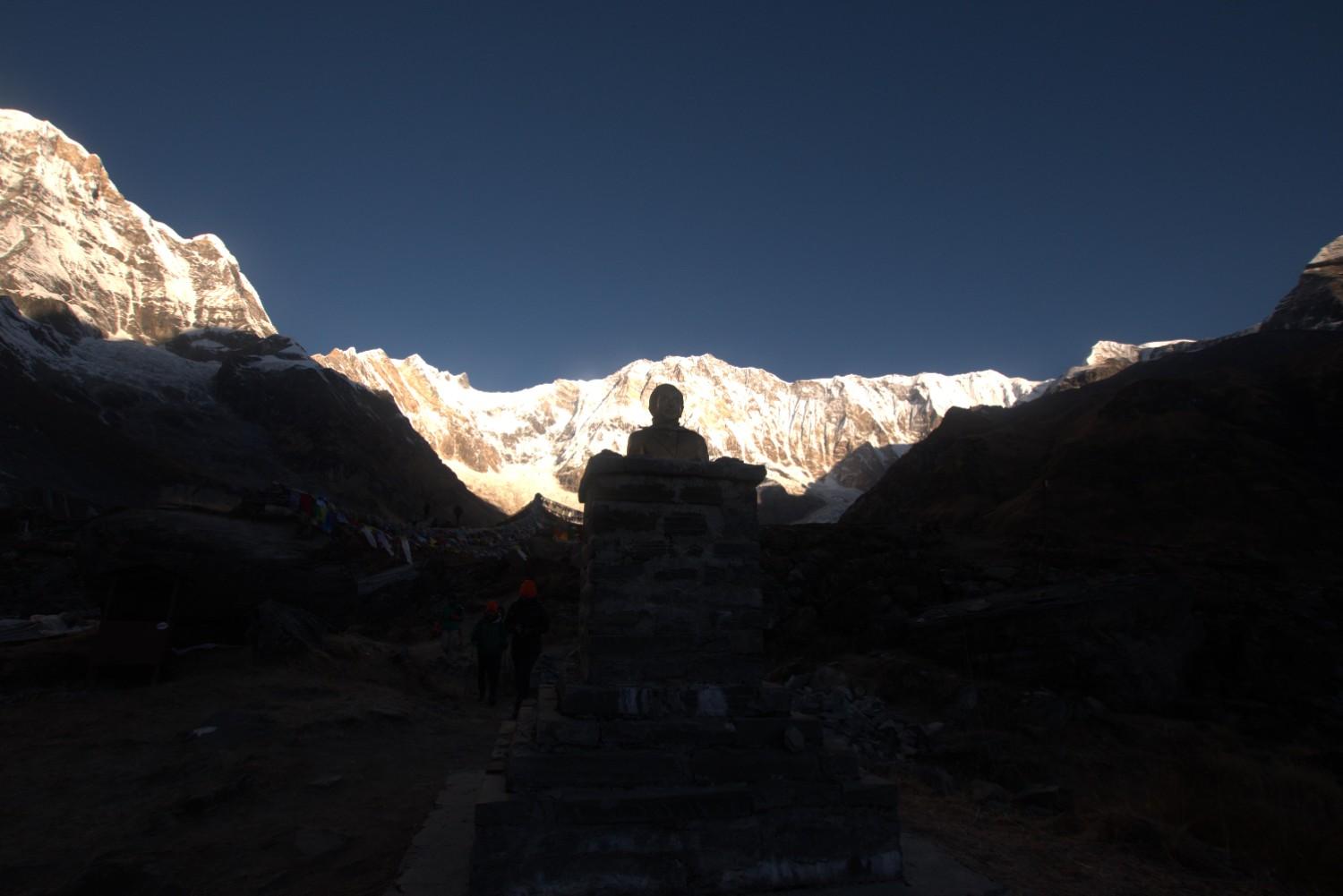
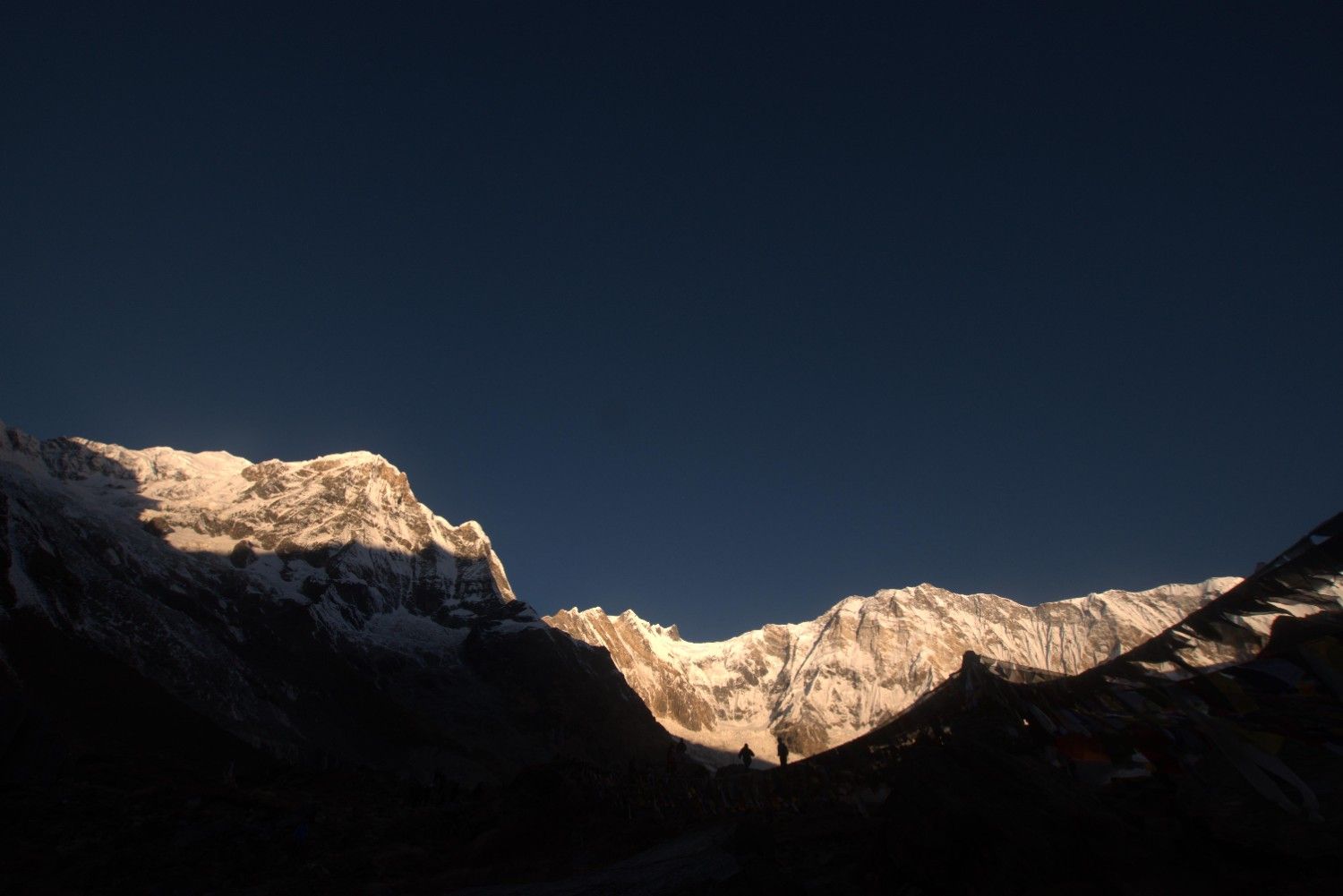
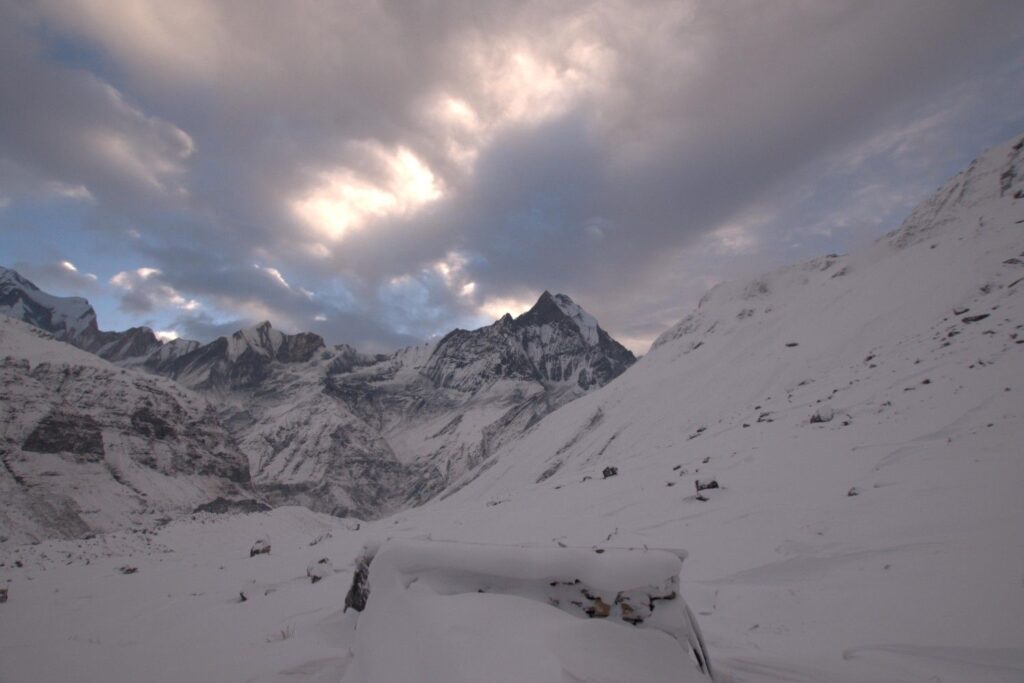
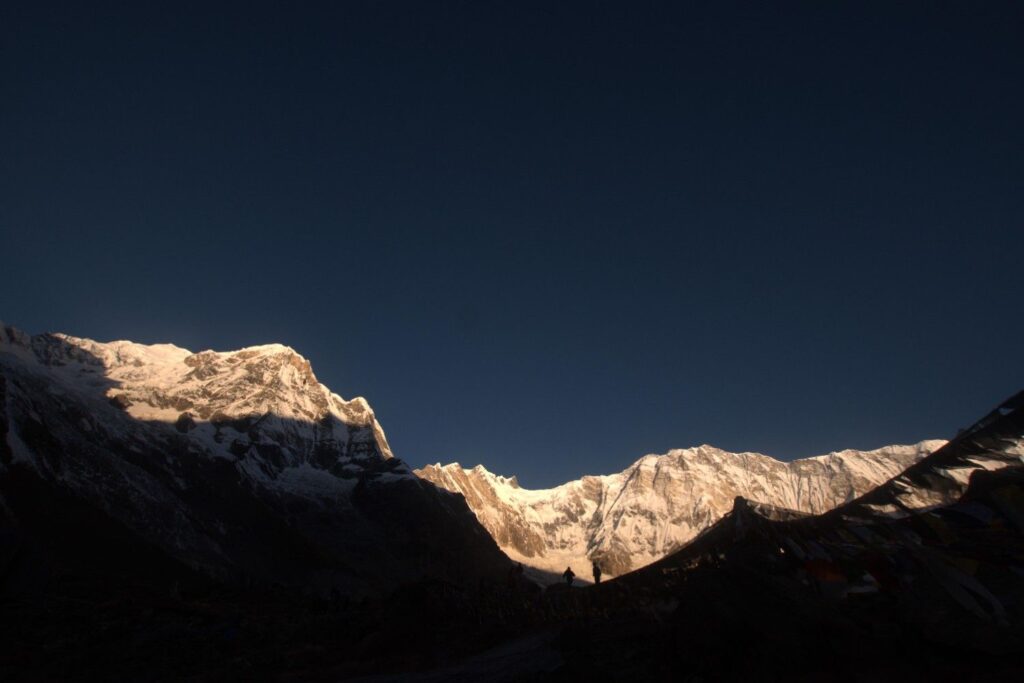
Today is the highlight of the trek, as you walk through the dramatic Annapurna Sanctuary and reach Annapurna Base Camp itself by afternoon. The final stretch opens up into a natural amphitheater of snow covered peaks, including Annapurna I, Machhapuchhre, and Hiunchuli, surrounding you on nearly all sides. Reaching base camp is often described as one of the most rewarding moments of the entire trip, and most trekkers spend the afternoon taking photos and simply absorbing the scale of the mountains before settling in for the night at this elevation.
Day 10
After the excitement of reaching base camp, today is a long descent day as you retrace part of the route back down through the valley. Heading back down gives you a completely different perspective on the scenery you passed through on the way up, since the terrain and views look different in reverse. The drop in elevation also comes as a relief for most trekkers, since the lower altitude of Bamboo makes for an easier night’s sleep compared to the nights spent higher up.
Day 11
Today’s trek brings you down to Jhinu Danda, a village known for its natural hot springs set right along the riverbank. After several days of steady walking, this is a welcome stop, and most trekkers take the opportunity to soak in the hot springs and let their legs recover before the final stretch back toward the roadhead. Jhinu has a relaxed atmosphere compared to the higher villages, and it’s a nice way to wind down the trekking portion of the trip.
Day 12
You’ll trek out to the nearest roadhead in the morning before catching a drive back to Pokhara for the evening. Arriving back in a proper city after over a week of trekking often feels like its own kind of reward, and most trekkers spend the rest of the day resting by Phewa Lake, enjoying a proper shower, or treating themselves to a good meal after days of teahouse food.
Day 13
Today brings the return drive back to Kathmandu, retracing the same route you took at the start of the trip. Once you arrive, the rest of the day is free, giving you time for any last minute shopping in Thamel or simply resting before your departure the next day.
Day 14
On your final day, you’ll be transferred to the airport in time for your departure flight, bringing the Annapurna Base Camp trek to a close. From the UNESCO sites of Kathmandu to the snow covered amphitheater at base camp, this itinerary covers a wide range of landscapes and cultural experiences across its full two weeks.
The Trip Cost Includes
- Guide and porter with insurance
- All ground transportation mentioned in the itinerary
- Annapurna Conservation Area Permit and TIMS card
- Teahouse accommodation during the trek
- All meals during the trek
- Hotel accommodation in Kathmandu and Pokhara with breakfast
- Trekking route map and duffel bag use
The Trip Cost Excludes
- International airfare
- Nepal entry visa fee
- Travel and medical insurance
- Personal expenses like snacks, drinks, and hot showers
- Tips for guide, porter, and driver
Add-ons and Options
Make your annapurna base camp trek tour fit your own pace and comfort level with a few simple add-ons.
- Extra Night in Kathmandu or Pokhara: Stay longer before or after your trek
- Private Room Upgrade: Enjoy more privacy where available along the route
- Flight Upgrade: Fly between Kathmandu and Pokhara instead of driving to save time
How to Customize Your Trip
Step 1: Choose your preferred departure date
Step 2: Enter the number of travelers
Step 3: Select your preferred add-ons
Step 4: Confirm accommodation and meal preferences
Step 5: Complete your booking
This kind of abc trekking flexibility means your trip can be adjusted around your schedule, fitness level, and comfort, rather than following a rigid, one size fits all plan.
Trek Gallery


Trek Essentials
- Sun Hat
- Warm Beanie
- Sunglasses with UV Protection
- Base Layer
- Fleece Jacket
- Down Jacket
- Windproof Outer Shell
- Lightweight Gloves
- Warm Insulated Gloves
- Trekking Pants
- Thermal Leggings
- Waterproof Shell Pants
- Trekking Boots
- Wool Socks
- Camp Shoes
- Sunscreen
- Lip Balm
- Wet Wipes
- Hand Sanitizer
- Daypack
- Duffel Bag
- Dry Bags
- Bandages And Blister Plasters
- Antiseptic Cream
- Pain Relief Tablets
- Diamox (Altitude Sickness, Consult Your Doctor Before Your Trek)
- Rehydration Salts
- Personal Prescription Medication
- Trekking Poles
- Headlamp
- Power Bank
- Water Bottle With Purification Tablets