

Good to Know

Arrival City
Kathmandu

Depature City
Kathmandu

Accommodation
Tea House & Hotel

Meals
Included

Trip Grade
Challenging

Maximum Altitude
5,555m/18,225ft

Activity
High Altitude Trekking
Highlights
- Cross all three legendary passes of the Khumbu, Kongma La, Cho La, and Renjo La, in a single continuous journey
- Stand at Everest Base Camp and walk the Khumbu Glacier that leads climbers toward the summit
- Hike to both Kala Patthar and Gokyo Ri, two of the finest viewpoints in the entire Everest region
- Admire the turquoise waters of the Gokyo Lakes and the massive Ngozumpa Glacier
- Visit Tengboche Monastery, the spiritual center of the Khumbu region
- One of the more complete forms of Everest Three High Passes Trek available, blending base camp trekking with high pass mountaineering style terrain
- Explore quiet Sherpa villages like Chhukhung, Dzongla, and Thame, far from the busier main trail
- Take in panoramic views of Everest, Lhotse, Makalu, Cho Oyu, and Ama Dablam from multiple angles
- A genuine test of endurance for trekkers who already have some altitude experience
Overviews
Everest Three Passes Trek, 20 Days
If you have already done some research into everest circuit trek options, you have probably noticed that most itineraries follow a single path in and back out again. That works well for a first trip to the Khumbu, but it also means you are only seeing one side of this incredible region, one trail, one set of views, one general elevation profile.
The Everest Three Passes Trek is built for people who want more. Instead of a single route, this trek links together Kongma La, Cho La, and Renjo La, three of the highest and most demanding passes in the Everest region, weaving through areas most standard itineraries never touch. It is one of the more complete forms of three passes trek nepal has to offer, combining the classic Everest Base Camp experience with genuine high altitude mountaineering style terrain.
This 20 day everest high pass trek fits in Everest Base Camp itself, a sunrise hike up Kala Patthar, the turquoise Gokyo Lakes, and a climb up Gokyo Ri, all connected by three separate passes that each sit above 5,300m. It is a serious undertaking, both physically and logistically, and it rewards trekkers with views and terrain that most people visiting the region simply never see.
Whether you have already completed the standard Everest Base Camp Trek and want a bigger challenge, or you are building toward more technical mountain travel down the line, this trek gives you one of the most complete experiences the Everest Base Camp Trek, Nepal has to offer, all without requiring mountaineering equipment or technical climbing skills.
History of the Route
The classic route to Everest Base Camp has existed since the earliest climbing expeditions of the 1950s, following the same general path Hillary and Tenzing used before their historic summit. Over time, as trekking tourism grew in the region, guides and trekkers began linking together the surrounding high passes to create longer, more demanding routes for those seeking a bigger challenge.
This is how the modern three passes circuit came together, stringing Kongma La, Cho La, and Renjo La into a single continuous journey around the Khumbu. Sagarmatha National Park, established to protect this entire region, oversees the trails connecting these passes today, and it remains one of the most important conservation areas in the entire Everest Base Camp Trek, Nepal has protected over the decades.
Landscape and Culture
Few trekking routes in Nepal cover as much varied terrain as this one. You will move through pine forest near Lukla, the busy trading hub of Namche Bazaar, quiet high altitude villages like Chhukhung and Dzongla, and finally the turquoise lake basin of Gokyo, all connected by three separate high mountain passes.
Tengboche Monastery, one of the spiritual centers of the Khumbu, sits directly along this ebc trekking route, and many trekkers describe the short visit there as one of the most memorable stops of the entire trip. Villages like Thame, the traditional home of many famous Sherpa climbers, offer a quieter, more authentic look at Khumbu life than the busier stretches near the main Everest Base Camp and three passes trek corridor.
Best Season for This Trek
March through May and September through November are considered to be ideal months for this three passes everest trek, providing the most favorable conditions for conquering the three passes. These months are also in sync with the flights that operate into Lukla.
This trek can also be undertaken during winter for those who have proper preparations and experience, but the possibility of closing of the higher passes due to heavy snow cannot be ruled out. This route is least suitable for monsoon because of the rains and fog at lower altitudes.
Weather and Temperature
Temperatures shift dramatically across this trek’s varied terrain. Lower villages near Lukla and Phakding stay relatively mild, while conditions turn seriously cold at higher points like Chhukhung, Dzongla, and the passes themselves, where wind exposure adds significantly to the chill factor.
Because this route reaches over 5,500m at multiple points, including Kongma La, Kala Patthar, and Renjo La, proper cold weather gear and a realistic understanding of base camp trekking in nepal at this altitude both matter enormously for comfort and safety.
Food, Water, Wifi and Accommodation
Accommodation throughout the trek is guesthouse style, with twin share rooms and shared bathrooms common at higher elevations, and more comfortable setups with attached bathrooms available in Lukla, Phakding, and Namche.
The meals will mostly consist of traditional foods such as dal bhat, noodle soup, and basic breakfasts. All food and meals will be provided on trekking days. More remote stops like Chhukhung and Dzongla have less variety on their menu because all of their provisions have to be transported from other places.
There is always drinking water at every single stop, although it might be boiled water, which means that one should bring a water bottle and water purification pills. Wi-Fi is available in most villages until Namche and sometimes even further, but there is none near the mountain passes and remote stops.
Permits
You will need a Sagarmatha National Park permit, a Pasang Lhamu Rural Municipality fee, and a TIMS card for this trek. All three are standard requirements for anyone trekking through this region and are arranged by your trekking agency before departure.
Outline Itinerary
Day 1
Your Everest Three Passes Trek begins the moment you land in Kathmandu. Our team will be there to greet you at the airport and transfer you to your hotel in a private vehicle, so there is nothing to figure out on your own after a long flight. Later that day, or the following morning if you arrive in the evening, you will meet your guide for a pre-trip briefing. This is where your guide walks you through the route, the three passes ahead, and what documents and gear you will need over the coming three weeks. It is worth bringing two passport-sized photos and a copy of your travel insurance policy to this meeting, since both are needed for your permits. The rest of the day is yours to rest, adjust to the time difference, and mentally prepare for a demanding trek.
Day 2
A short, scenic flight takes you from Kathmandu to Lukla, often considered one of the most thrilling short flights in the world thanks to its mountain approach. Depending on the season, this flight may actually depart from Ramechhap instead of Kathmandu, since air traffic gets redirected there during the busier trekking months. Once you land in Lukla, you will have breakfast while your guide organizes porters for the trek ahead. From there, the trail follows the Dudh Kosi River on a fairly gentle path, passing small villages and giving you a first real taste of Khumbu scenery. It is an easier first trekking day by design, meant to ease you into the rhythm of walking rather than test your limits right away. You will spend the night in Phakding, a small riverside village that marks the true starting point of the trek.
Day 3
Today’s trail follows the Dudh Kosi River, crossing it several times on suspension bridges strung with colourful prayer flags, including the well-known Hillary Suspension Bridge. Partway through the day, you will pass through the entrance checkpoint to Sagarmatha National Park, where your permits get checked and logged. After a lunch stop in Jorsalle, the trail turns steeply uphill for the final push into Namche Bazaar, a climb that tests your legs but rewards you with widening mountain views the higher you go. Namche itself is the largest and liveliest village on the entire route, known as the gateway to Everest, with bakeries, gear shops, restaurants, and a busy Saturday market. Reaching it after a demanding climb feels like a genuine milestone, and its energy makes for a welcome contrast to the quiet trail behind you. You will spend two nights here, since tomorrow is a dedicated rest day.
Day 4
Rather than climbing higher today, you will stay in Namche to give your body time to adjust to the thinner air, a strategy that matters even more on this trek than on a standard Everest Base Camp itinerary given the altitude still ahead. Most trekkers spend the morning hiking up toward Hotel Everest View, one of the highest-placed hotels in the world, for an early look at Everest, Lhotse, and Ama Dablam. Along the way, you will pass through Khumjung and Khunde, quieter villages that see far fewer visitors than Namche itself. In the afternoon, many trekkers visit Namche’s small museum dedicated to Sherpa culture and history, or simply wander the town’s shops and cafes. This kind of built-in rest day, moving a little without gaining net altitude, is one of the most effective ways to reduce your risk of altitude sickness later in the trek. By evening, you will feel noticeably more settled at this elevation than when you first arrived.
Day 5
The trek begins with constant sightings of Khumbi La and Taboche as you move out of Namche, although expect a cold wind to blow in this area as well. Halfway through the journey, there is a split in the path into an upper and a lower trail and this journey will be along the upper one. You will find Phorste Thanga, a small village, before making your way up once again to reach the destination. Tengboche can be reached by a climb, and the effort put into the process pays off when you reach here in terms of the scenery and the ambience as well. Tengboche is home to the largest monastery that exists in the Khumbu region and which is also highly religious and spiritual, while you will see the mountain Ama Dablam towering behind the monastery.
Day 6
Today’s walk starts with a descent through rhododendron forest on a wide, easy trail, a pleasant change of pace after yesterday’s climb. After crossing a bridge over the Imja River, the trail brings you into Pangboche, a village known for its own historic monastery and wide-open mountain views. Continuing above Pangboche, you will get a clear look at the Himalayas along with a glimpse of Pangboche Monastery itself, one of the oldest in the region. From there, the trail pushes into the Imja Valley, with the terrain growing steadily more open and alpine as trees become scarce. By the time you reach Dingboche, a traditional Sherpa village known for its stone-walled fields, you will have climbed considerably in elevation over the course of the day. Dingboche also happens to be a popular staging point for climbers heading toward Island Peak and Ama Dablam, so you may spot expedition groups passing through.
Day 7
This is your second dedicated rest day, and like Namche, it is a strategic pause rather than a true day off. Dingboche itself is a fairly developed Sherpa village for its altitude, complete with a helicopter landing pad, a satellite internet cafe, and reportedly one of the highest billiard halls in the world. Most trekkers spend the morning hiking up Nangkartshang Peak, a nearby viewpoint that offers exceptional views of Ama Dablam, sometimes visible from its summit all the way down to its base on a clear day. The hike up and back takes a few hours, giving your body meaningful altitude exposure without overexerting you. The rest of the afternoon is free for resting, doing laundry, or simply enjoying the mountain views from the village itself. This second acclimatization stop is especially important on this trek, since the first pass crossing begins in just two days.
Day 8
Today’s trail combines both uphill and downhill sections as you leave Dingboche behind and head toward Chhukhung, the last proper village before the first pass crossing. Along the way, you will pass traditional stone farms and fences, along with open grazing areas used by local yak herders, particularly around a spot called Bibre. The pace today can be relaxed compared to earlier days, since the distance is shorter and the goal is simply positioning yourself for tomorrow’s demanding crossing. Chhukhung itself is a small, quiet settlement with a handful of guesthouses, sitting beneath the dramatic presence of Ama Dablam. Many trekkers use the extra time here to double-check their gear and rest properly before the long day ahead. This is also the last point with reliable food and lodging options before you head into more remote terrain.
Day 9
This is one of the longest and most demanding days of the entire trek, typically taking 7 to 9 hours to complete. Kongma La is the highest of the three passes on this route, and there are two possible approaches, one climbing northwest of Chhukhung over glacial moraine, the other looping back toward Bibre before joining the trail above the Niyang Khola. Since there are no teahouses, shops, or water sources along the pass itself, you will carry packed food and water with you for the full crossing. At the summit, you will find strings of Buddhist prayer flags marking the highest point of your journey so far, along with sweeping views if the weather cooperates. After the crossing, the trail turns north along the edge of the Khumbu Glacier before descending into Lobuche, a small settlement where you will rest for the night. Completing this pass is often described by trekkers as the moment the trip truly earns its “three passes” name.
Day 10
The trail today stays at a fairly manageable grade until you reach Gorak Shep, where you will stop for lunch and a short rest before continuing on. From Gorak Shep, the walk to Everest Base Camp follows the edge of the Khumbu Glacier, offering sweeping Himalayan views on a clear day. Reaching Everest Base Camp itself is a major milestone, since it is the closest most trekkers can get to Mount Everest without mountaineering equipment or a climbing permit. The view of the Khumbu Icefall from base camp is genuinely striking, a reminder of the technical terrain climbers face above this point, especially if expedition teams happen to be camped there during spring season. After spending time taking it all in, you will retrace your steps back to Gorak Shep for the night. This day, more than any other, tends to be the emotional high point of the trek for most trekkers.
Day 11
Most of this day is spent climbing Kala Patthar, a rocky viewpoint that sits at the highest elevation you will reach on the entire trek. The climb is steep and the air is thin, but the reward is one of the best ground level views of Everest available anywhere in the region, along with Nuptse, Pumori, and other Khumbu giants crowding the skyline. Many trekkers aim to reach the top around sunrise, when the light on the surrounding peaks is at its most dramatic. After taking in the view and warming up, you will go back to Gorak Shep for a proper breakfast. From there, the trail continues downward toward Lobuche, retracing part of yesterday’s route with considerably easier breathing at the lower elevation. This day marks the transition from the base camp portion of the trek into the second half, which leads toward Cho La Pass.
Day 12
Today’s trail starts with a descent from Lobuche before splitting into two directions, and this itinerary takes the right hand path toward Dzongla. Along the way, you will pass a scattering of stupas and stone memorials, quiet reminders of the mountaineering history in this region. The trail then climbs again, bringing you near Chola Tsho Lake, a small alpine lake that adds a peaceful stop partway through the day. Continuing on, you will cross the Chola Khola on a footbridge before making the final approach into Dzongla. Dzongla itself is a small, remote settlement with limited facilities, chosen specifically for its position ahead of tomorrow’s pass crossing. This shorter trekking day is intentionally built in to keep you fresh for the demanding hours ahead.
Day 13
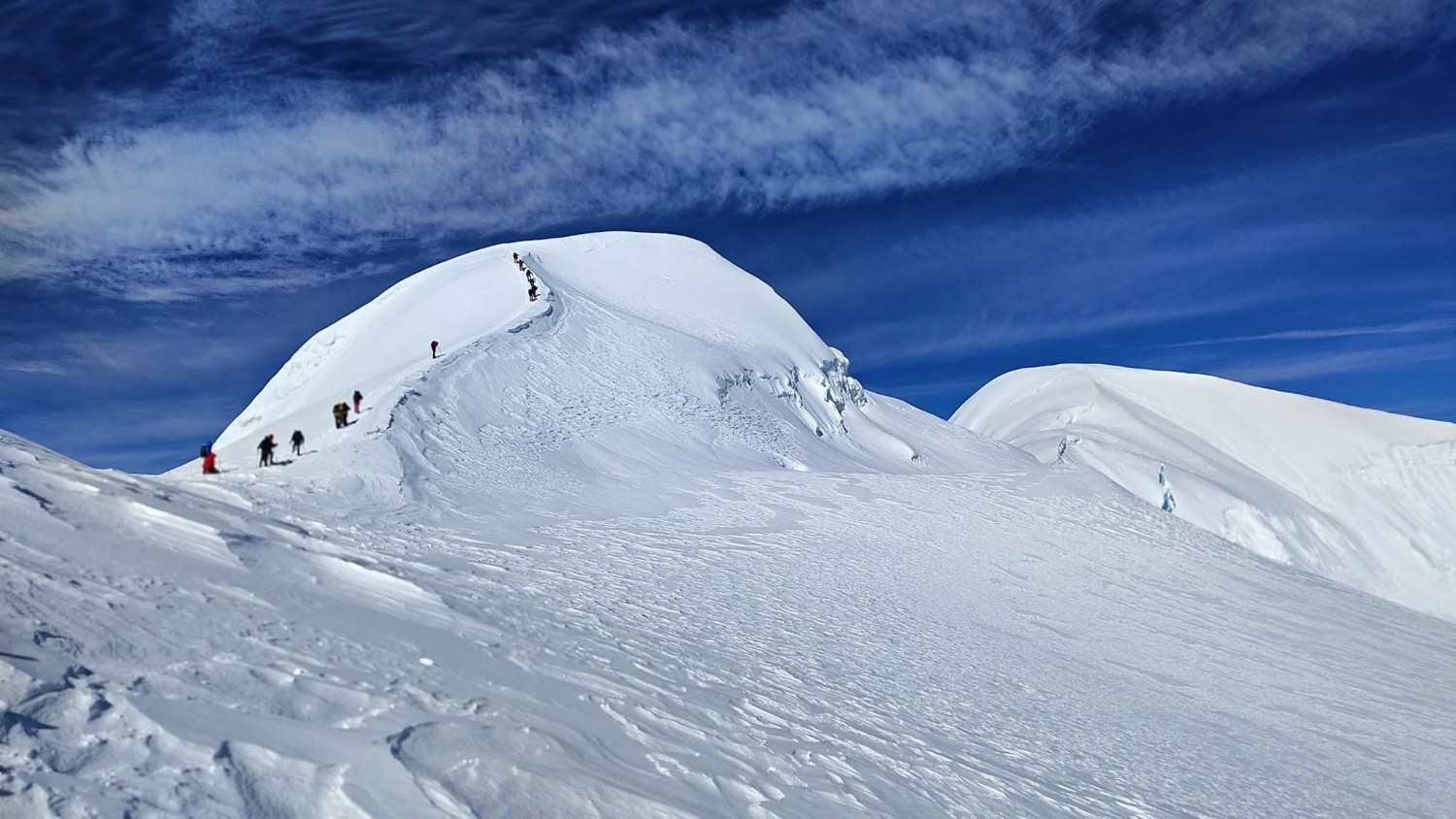
This is widely considered one of the most technically demanding days of the entire trek, and for that reason, most groups start well before dawn, often around 4 or 5 in the morning. Starting early allows you to cross the pass before midday, when weather conditions tend to be more stable and predictable. The terrain near the top can involve loose rock and, depending on conditions, patches of snow or ice that require careful footing. From the summit of Cho La Pass, the views are genuinely spectacular, stretching across the surrounding peaks before you begin your descent toward Gokyo. The route continues through Khara and Pangka before crossing the Ngozumpa Glacier, the longest glacier in Nepal, with striking views of Cho Oyu and Kangtega along the way. By the time you reach Gokyo village, set beside one of the famous Gokyo Lakes, you will have completed the second of your three passes.
Day 14
Today is a dedicated side trip rather than a trekking day toward your next destination, giving you a chance to explore the Gokyo Valley properly. An early, steep climb takes you to the summit of Gokyo Ri, one of the best viewpoints in the entire Everest region. From the top, you will see the full turquoise expanse of the Gokyo Lakes below, the massive Ngozumpa Glacier stretching out beside them, and an extraordinary panorama that includes Everest, Lhotse, Nuptse, Makalu, and Cho Oyu all at once. Many trekkers rank this view among the best of the entire trip, rivaling or even surpassing Kala Patthar. After taking it all in, you will descend back to Gokyo village, where you will spend a second night. The relatively short duration of today’s hike gives your body a bit of a breather before tomorrow’s final pass crossing.
Day 15
This is a long trekking day, though the trail itself follows a fairly standard grade compared to the technical terrain of Cho La Pass. As you climb toward Renjo La, the third and final pass of this trek, you will be treated to one of the best views of Mount Everest found anywhere along the route, paired with a striking look back over the Gokyo Lakes. Completing this crossing means you have officially finished all three passes that give this trek its name. After enjoying the summit views, the trail descends into Lungden, a small settlement that marks the beginning of your return journey toward Namche Bazaar. The physical and mental sense of accomplishment on this day tends to be considerable, since the hardest terrain of the trek is now behind you. You will spend the night at a guesthouse in Lungden, recovering from a demanding but rewarding day.
Day 16
Today’s trail mostly descends, offering a welcome change of pace after three consecutive days of high pass crossings. Along the way, you will pass striking snow capped peaks that remain visible for much of the walk. About 150 meters above Thame sits Thame Monastery, a picturesque site nestled among the homes of local monks and villagers, overlooking the valley below. Thame itself holds a special place in Everest mountaineering history, since it is the hometown of several renowned Sherpa climbers who have summited Everest multiple times. The village also hosts the Mani Rimdu festival each spring, a major cultural celebration if your trip happens to align with it. You will spend the night here, in one of the quieter and more traditional villages found along this entire route.
Day 17
Thame is known for having largely escaped the crowds that pass through the busier sections of the main Everest trail, and it is also home to one of the oldest monasteries in the region. The walk today is a peaceful one, winding in and out of forest along the side of a canyon with excellent mountain views throughout. Compared to the demanding days behind you, this stretch feels relatively easy and short, giving you time to properly notice details of the landscape you may have rushed past earlier in the trek. By the afternoon, you will arrive back in Namche Bazaar, a village that will likely feel familiar and almost like a small homecoming after so many days in more remote terrain. The bakeries, shops, and general buzz of Namche make for a welcome final stop before the trek’s last stretch. You will spend the night here before continuing toward Lukla.
Day 18
This is the last full trekking day for you, when you walk back along the same route that you had followed at the beginning of your trip. On walking through the same places, it helps you to think about what you have learned since Day 2, including the pass crossing of Kongma La and views from the top of Gokyo Ri and Renjo La. The route also takes you through Chheplung and other such places before bringing you back to Lukla during the day. Many trekkers consider their return to Lukla bittersweet because it marks the end of a difficult but satisfying journey. After completing the trekking part of the journey, you can enjoy the evening with free time in the town.
Day 19
Depending on the season, your return flight may depart directly from Lukla or route through Manthali in Ramechhap, mirroring whichever arrangement applied to your outbound journey on Day 2. Either way, you will find yourself back in Kathmandu by the early afternoon, transferred to your hotel in a shared tourist vehicle. This is a good opportunity to enjoy a proper hot shower, a comfortable bed, and a change of scenery after nearly three weeks in the mountains. Some trekkers choose to extend their trip at this point with a visit to Chitwan National Park or Pokhara, though this itinerary treats today as a return and rest day. In the evening, your trip wraps up with a farewell dinner at a good restaurant in the city, a fitting close to a genuinely demanding trek. It is also common to receive a trip completion certificate at this dinner, marking your successful crossing of all three passes.
Day 20
Your Everest Three Passes Trek comes to an end today. A representative will transfer you to Tribhuvan International Airport in time for your international flight home. Depending on your departure time, you may have a little free time in the morning for any last minute shopping or a final walk through Kathmandu’s streets. This marks the close of a trip that took you across three of the highest passes in the Everest region, through Everest Base Camp, and into the turquoise waters of the Gokyo Valley, all in twenty days. It is one of the more complete and demanding trekking achievements available in Nepal, and by this point, you will have earned every bit of that accomplishment. Safe travels home.
The Trip Cost Includes
- Experienced, government licensed guide, English speaking, with an assistant guide for groups over 7
- Porter service, one porter for every two trekkers
- Twin share accommodation in a hotel in Kathmandu with breakfast
- Guesthouse accommodation during the trek, with attached bathrooms in Lukla, Phakding, and Namche
- All meals during the trek, including a hot drink with each meal
- Kathmandu to Lukla flights, both ways
- Sagarmatha National Park permit, Pasang Lhamu Rural Municipality fee, and TIMS card
- Airport transfers
- Duffel bag, trekking map, and first aid kit with oximeter
- Farewell dinner in Kathmandu
The Trip Cost Excludes
- International airfare
- Nepal entry visa fee
- Lunch and dinner in Kathmandu
- Travel and medical insurance, including high altitude rescue coverage
- Personal expenses like snacks, drinks, and hot showers
- Tips for guide and porter
Add-ons and Options
Shape this trek around your own comfort level with a few simple add-ons.
- Buffer Days: Add extra days before or after the trek in case of Lukla flight delays
- Private Room Upgrade: Enjoy more privacy where available along the route
- Helicopter Option: Upgrade the Lukla flight to a private helicopter transfer
- Extra Guide Support: Add an assistant guide for smaller groups tackling both cho la pass nepal and renjo la pass trek crossings
How to Customize Your Trip
Step 1: Choose your preferred departure date within the recommended season
Step 2: Enter the number of travelers
Step 3: Select your preferred add-ons
Step 4: Confirm accommodation and meal preferences
Step 5: Complete your booking
Working with an experienced Everest Expeditions Nepal team matters more on this route than on a standard base camp trek, given the technical nature of crossing three separate high passes.
Trek Gallery



Trek Essentials
- Sun Hat
- Warm Beanie
- Sunglasses With UV Protection
- Base Layer
- Fleece Jacket
- Down Jacket
- Windproof Outer Shell
- Lightweight Gloves
- Warm Insulated Gloves
- Trekking Pants
- Thermal Leggings
- Waterproof Shell Pants
- Trekking Boots
- Wool Socks
- Camp Shoes
- Ice Cleats Or Micro Spikes For The Passes
- Sunscreen
- Lip Balm
- Wet Wipes
- Hand Sanitizer
- Daypack
- Duffel Bag
- Trekking Poles
- Headlamp
- Power Bank
- Water Bottle With Purification Tablets