Good to Know

Arrival City
Kathmandu

Depature City
Kathmandu

Accommodation
Tea House & Hotel

Meals
Included

Trip Grade
Challenging

Maximum Altitude
5,360m/17,585ft

Activity
Trekking and Camping
Highlights
- Cross both French Pass and Dhampus Pass, two of the most demanding high passes in Nepal
- Reach Dhaulagiri Base Camp and stand beneath the north face of the world’s 7th highest mountain
- One of the most complete forms of dhaulagiri base camp trek available, combining remote camping with genuine wilderness trekking
- Walk through traditional Magar villages including Muri, rich in local culture and hospitality
- Descend into the mysterious, high altitude Hidden Valley between the two passes
- Follow the dramatic Kali Gandaki River valley down to Marpha and Jomsom
- Take a short scenic flight from Jomsom to Pokhara over the Annapurna and Dhaulagiri ranges
- Camp under genuinely starlit skies at some of the most remote base camps in the Himalayas
- A serious undertaking for trekkers who want solitude and grandeur, not crowded trails
Overviews
Dhaulagiri Circuit Trek, 20 Days
If you have already trekked in Nepal once or twice, you have probably noticed that the more famous routes, Everest Base Camp, Annapurna Base Camp, come with crowded trails, packed teahouses, and a fairly predictable experience. That is not a bad thing, but if you are looking for something that pushes further into genuine wilderness, this trek is built for exactly that.
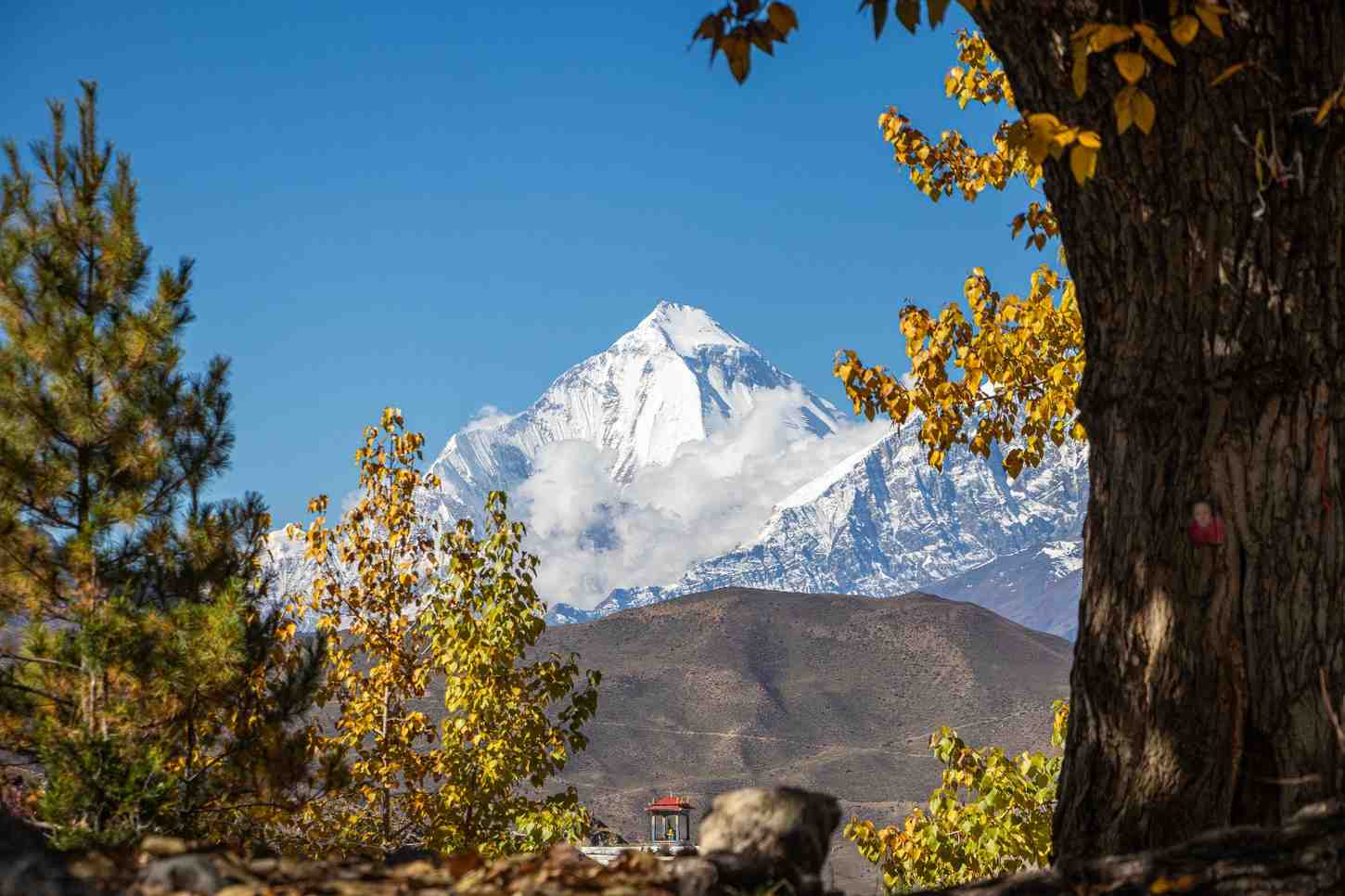
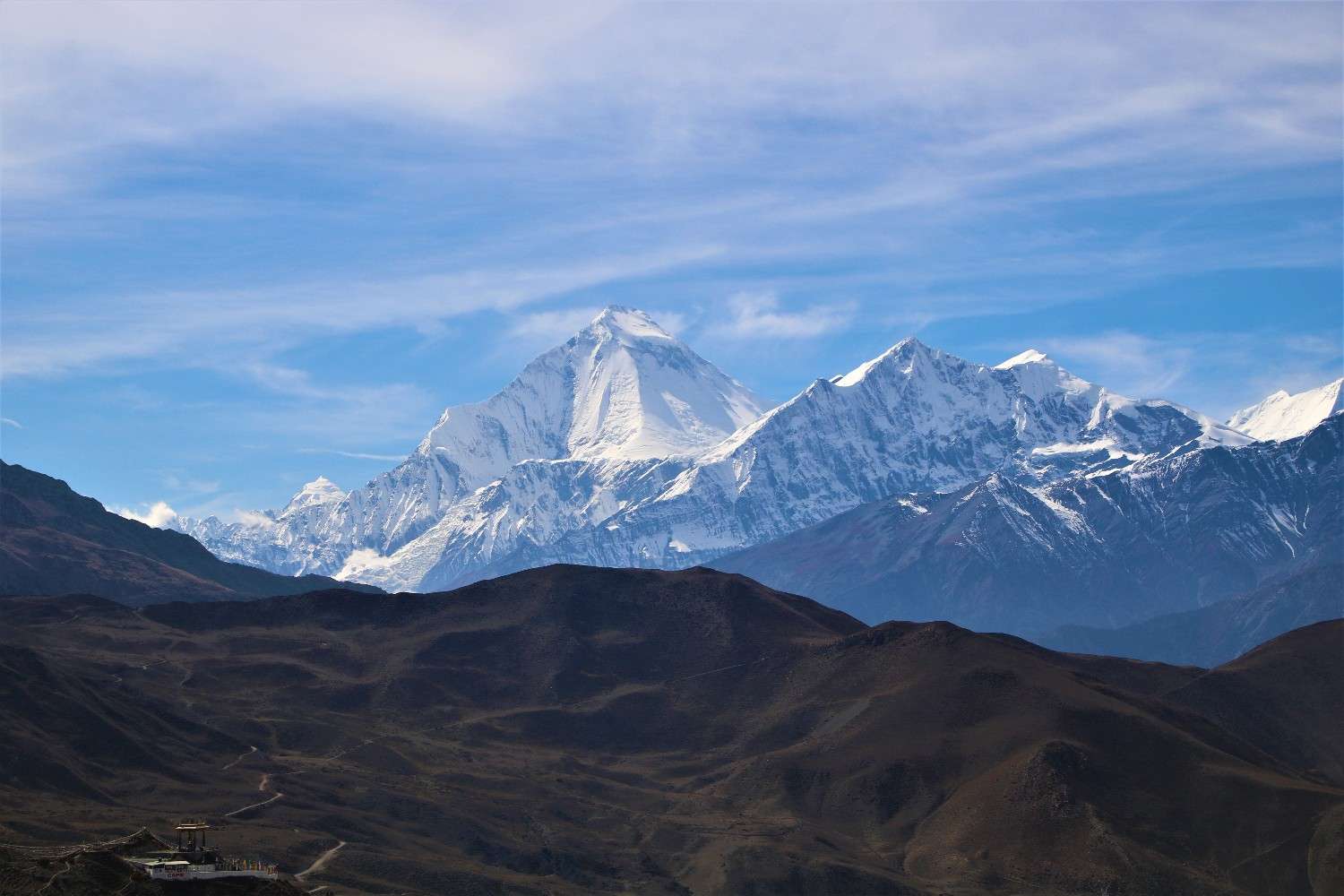
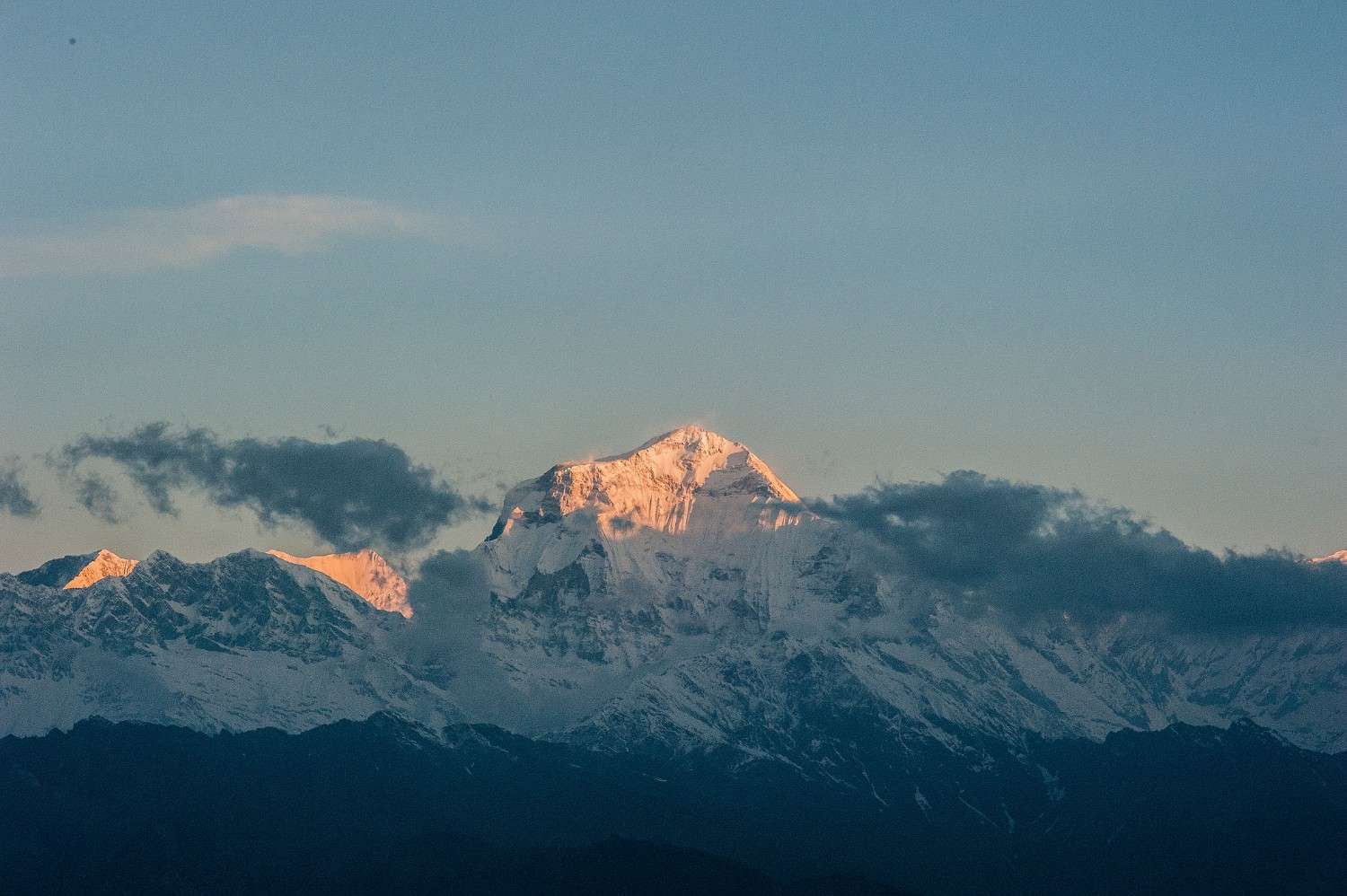
The Dhaulagiri circuit Trek takes you around Dhaulagiri, the world’s 7th highest mountain at 8,167m, through terrain that stays remote and largely untouched by mass tourism. Instead of teahouse to teahouse walking, most nights on this dhaulagiri trek are spent in a tented camp, with your crew setting up dining tents, kitchen gear, and even shower tents at high altitude camps most trekkers never reach.
This 20 day dhaulagiri circuit trekking itinerary is not for beginners. It demands real stamina, comfort with basic camping conditions, and the ability to handle two technical high passes, French Pass and Dhampus Pass, both above 5,200m. In exchange, you get Dhaulagiri Base Camp, the eerie beauty of Hidden Valley, and a level of solitude that busier routes simply cannot offer.
Whether you have already completed a standard teahouse trek and want a genuine step up in difficulty, or you are specifically searching for a dhaulagiri trek route that avoids crowds entirely, this itinerary delivers one of the most demanding and rewarding trekking experiences available in Nepal.
Where is Dhaulagiri Located
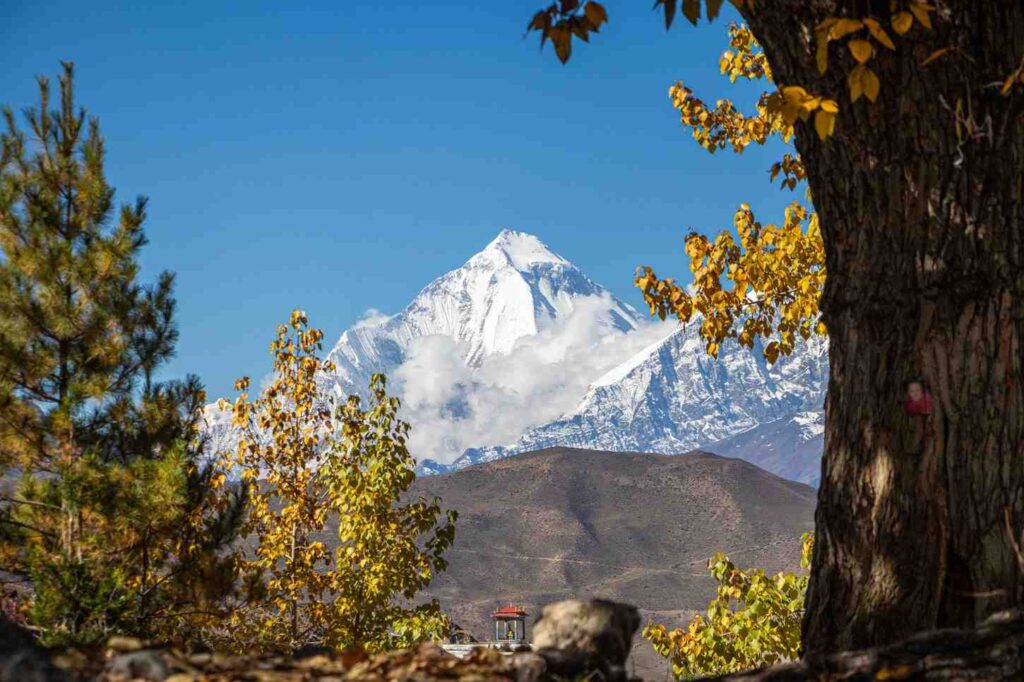
Looking to know where is dhaulagiri situated precisely? Well, dhaulagiri is located in the western part of Nepal, acting as a natural wall between Kali Gandaki gorge on the one hand and the rather isolated area of Myagdi on the other hand. The meaning of the name is approximately white mountain which aptly describes the snow-clad mountain.
Despite its size and prominence, the Dhaulagiri region receives far fewer visitors than the Everest or Annapurna areas, largely because a proper circuit around the mountain demands camping, technical pass crossings, and a level of self sufficiency that shorter, teahouse based treks simply do not require.
Landscape and Culture
The trek starts by first driving from Kathmandu all the way to Beni and then trekking along the banks of the Myagdi Khola towards the higher reaches. Lower villages like Babiachor, Dharapani and Muri are inhabited by Magars, who provide warm welcome and glimpse into the traditional mountain culture prior to entering the wilderness zone past Boghara.
Past Italian Base Camp, the landscape shifts dramatically, glaciers, rocky moraines, and towering rock walls replace the forested lower trail. This kind of dhaulagiri trek route through Dhaulagiri Base Camp and the Hidden Valley offers scenery that feels genuinely untouched, since so few trekkers make it this far into the region each year.
Best Season for This Trek
Spring, from March to early June, and autumn, from mid-September to November, are the best months for this trek, offering the clearest skies and most stable conditions for crossing both French Pass and Dhampus Pass. Monsoon months, July and August, are best avoided due to rain and poor visibility.
Winter trekking is technically possible but genuinely harsh at this altitude, with fewer trekkers on the trail but colder temperatures and a higher chance of the passes being affected by snow.
Weather and Temperature
There is a vast temperature variation in this trek, depending on the height at which one is at. In the low-altitude valleys, around Beni and Babiachor, temperatures remain warm, but the temperatures become cold when one reaches Italian Base Camp and Dhaulagiri Base Camp, even colder at the two passes.
Because this trek reaches 5,360m at French Pass, nights at the higher camps regularly drop well below freezing, even during the warmer trekking seasons, which is part of why the dhaulagiri circuit trek difficulty ranks among the more demanding treks in Nepal.
Food, Water, Wifi and Accommodation
Accommodation shifts significantly throughout this trek. The first few nights and last few nights use guesthouses, while the middle stretch, 13 nights in total, is spent in a fully equipped tented camp with dining tents, kitchen gear, and toilet and shower tents set up by your crew each evening.
You will have your meals cooked by an experienced camping cook who makes dishes like dal bhat, noodles soup, etc. Meals are provided with your trekking schedule. Drinking water is purified by your team.
Wifi is simply not available once you leave Beni and enter the tented camping section of the route, a genuine disconnect that some trekkers specifically seek out on a trip like this. Showering becomes difficult during the fully camped stretch, though proper showers are available again once you reach Pokhara and Kathmandu.
Permits
An ACAP permit and a TIMS card are required for the trek. These are basic requirements that will be taken care of by your trekking agency beforehand to keep things hassle-free for you.
Outline Itinerary
Day 1
Your Dhaulagiri circuit Trek begins the moment you land at Tribhuvan International Airport. A representative will be waiting for you and will take you to your hotel in a private vehicle, so there is nothing to figure out on your own after a long flight. If you arrive before mid afternoon, you will meet your guide for a pre-trip briefing the same day at the office. If you land later, this meeting happens the following morning instead. Either way, this is where your guide walks you through the three week journey ahead, covering the route, the camping arrangements, permits, and what to expect once the trail turns remote. It is worth bringing a passport sized photo and a readable copy of your travel insurance policy to this meeting, since both are needed to process your trekking permits. The rest of the day is yours to rest, adjust to the time difference, and finalize any last minute gear purchases in Kathmandu before heading into the mountains.
Day 2
After an early breakfast, you will leave Kathmandu behind on a scenic 8 to 9 hour drive along winding mountain roads. The first stretch takes you through the busy outskirts of the capital before the road narrows into hillside terrain, passing terraced farmland, dense forest, and small roadside villages along the way. As you get closer to Beni, distant snow capped peaks start appearing on the horizon, building real anticipation for the trekking days ahead. Once you arrive, you will check into a guesthouse and have the evening to relax and mentally prepare, since tomorrow marks the actual start of your trek.
Day 3
This is your first real day on foot, and it eases you into the rhythm of the trek. Starting from Beni, the trail follows the banks of the Myagdi Khola River through a warm, subtropical landscape. There will be many villages and terraces of agriculture passed on the route. Also there will be some suspension bridges across the rushing river water. Once reaching Babiachor, the atmosphere of the mountain area will fully settle. Babiachor is an authentic representation of the countryside life of Nepal and you will spend a pleasant night at the tent campsite.
Day 4
It continues with the gentle climb, passing along the Myagdi River further into the Dhaulagiri area. The route runs through terraced agricultural fields, forests, and settlements. Sometimes one can see the snowy peaks that break through the forest. It is a rather relaxing day full of views and allowing to get used to the trekkers pace of walking. Dharapani is a mountain village with a magnificent view of the surroundings.
Day 5
Today’s trek takes you to Muri, which is a culturally rich village of Magar people who have their unique culture and identity. There will be quite a few sections of climbs during the trek to Muri, and at every climb point you can see your view widening, and peaks of Dhaulagiri mountains gradually coming into your view. Muri is an amazing place, and enjoying the evening in Muri will provide you a taste of the mountain life.
Day 6
It’s a long day with many variations. Your day begins with steep descents to cross a few small streams followed by ascent over a low pass from where you get the view of Gustung South. The next part of your trek will take you through lush green vegetation and then after going down to the west side of the river Myagdi Khola, you reach a beautiful village named Naura. The last uphill zigzag trek route brings you to Boghara village with some amazing views of Manapathi Peak, Gurja Himal, and Dhaulagiri I.
Day 7
Today’s route follows through the forested valley of the Myagdi Khola, then passes the isolated village of Jyardan before making its way to Lipshe via rocky terrain. This trek continues up to the Lapche Kharka before ascending again to reach Dobang. There is a visible change in scenery as one advances on the route, as the lush forests eventually become a wilder and rugged landscape once the destination is reached.
Day 8
The route continues to follow the Myagdi Khola through the forest and makes a wooden bridge across the river to get to the grazing lands. The last part of the journey entails a tough and landslip-prone climb to reach the destination at Choriban Khola. Given that one will be trekking above 2,500m, it is time to be careful with the speed and water intake.
Day 9
Today is very special indeed. The route leads you through the thick forest and over the glacial creeks where the scenery becomes even more dramatic and spectacular as you go higher. On approaching Italian Base Camp, the majestic peaks of Dhaulagiri II, III, and V provide the most amazing backdrops to your destination point. This camp is not only picturesque but also represents one of the vital acclimatization camps prior to ascending further into the mountains.
Day 10
Instead of going up further today, you spend your day recovering from the ascent and acclimatizing yourself to the altitude. Such a rest day is critical for your further expedition and allows you to appreciate the surroundings more and take care of your health and well-being in order to prepare yourself properly for the challenges that lie ahead.
Day 11
Leaving Italian Base Camp behind, the trail takes you through a narrow, steep gorge that can be prone to occasional rockfall, so your guide will set a careful pace through this section. You will continue climbing through tricky terrain, passing Swiss Base Camp along the way, before finally arriving at Glacier Camp. The setting here is genuinely striking, with views of the Chhongardan Glacier alongside Himalayan giants like Dhaulagiri, Manapathi Peak, Tsaurabong Peak, and Dhampus Peak all visible from camp.
Day 12
This is going to be one of the toughest and yet one of the most rewarding days during the entire trek. You will have to walk across glaciers and rocks through the gradual widening of the valley into a T-shaped junction between Tukuche and Dhaulagiri. From here it is just a little walk to the base camp of Dhaulagiri where you get some stunning view of the north face of Dhaulagiri I that reaches up to 8,167 meters. The camp lies directly beneath this monstrous peak, with peaks around it.
Day 13
Another vital day of rest for acclimatization, this time in one of the most scenic spots on the whole trek. You may take the whole day just exploring the surrounding glacier or simply relax amidst the majestic presence of Dhaulagiri II, III, and V peaks.
Day 14
Today marks one of the most challenging and rewarding days of the entire journey. Leaving the glacier behind, you will trek across two hills that cut through the moraine before the trail climbs steadily along gentle slopes toward French Pass itself. The climb is steep, but reaching the top rewards you with a jaw dropping panorama that includes Mukut Himal, Sita Chuchura, Tashi Kang, Tukuche Peak, Thapa Peak, and the wider Dhaulagiri massif. After taking in the view, you will descend into the remote and strikingly quiet Hidden Valley, a high altitude sanctuary tucked among rugged mountains, perfect for a memorable overnight camp.
Day 15
The trek involves descending from the Hidden Valley and then ascending again to cross Dhampus Pass at 5,200m, thus providing yet another panoramic Himalayan view. After crossing the pass, the trek will descend to Yak Kharka, which is a place full of beautiful meadows where one can see yaks calmly grazing. This is the true relief after several days of trekking through high, barren altitude zones; the campsite here allows for a peaceful and relaxing experience.
Day 16
The descent of the day passes through the pretty village of Marpha that is famous for its apple orchards and home-made apple brandy. Along the way, one will follow Kali Gandaki River through fields of terraced cultivation and small settlements until reaching Jomsom, the headquarters of the Mustang district. After several days of being isolated in nature, one feels truly civilized by visiting this bustling town.
Day 17
In early morning flight takes you from Jomsom to the lakeside city of Pokhara. This short but genuinely scenic flight offers a bird’s eye view of both the Annapurna and Dhaulagiri ranges, a fitting farewell to the mountains you have spent the past two weeks walking through. Once in Pokhara, you will have the rest of the day free to explore the city, relax by Phewa Lake, or simply enjoy a proper shower and comfortable bed after so many nights of camping.
Day 18
This day is built in specifically as a buffer in case your Jomsom to Pokhara flight gets delayed or cancelled, which does happen occasionally due to mountain weather conditions. If your flight departs on schedule, you can skip ahead and use this day for extra rest or exploring in Pokhara instead. If you do end up staying in Jomsom, it is a relaxed day to explore the local area at your own pace.
Day 19
After breakfast, you will set out on the scenic drive back to Kathmandu, taking in Nepal’s hills, rivers, and terraced fields one more time. Once you arrive, the afternoon is free for last minute souvenir shopping or simply relaxing after three weeks on the trail. In the evening, you will celebrate the successful completion of your trek with a farewell dinner at a traditional Nepali restaurant, complete with cultural dance performances.
Day 20
Your Dhaulagiri circuit Trek comes to a close today. Our team will transfer you to Tribhuvan International Airport in time for your flight home, bringing an end to a genuinely demanding and rewarding three week journey through some of the most remote terrain in the Himalayas.
The Trip Cost Includes
- Experienced, government licensed guide, English speaking, with an assistant guide for groups over 7
- Porter service, one porter for every two trekkers
- Twin share accommodation in a 3-star hotel in Kathmandu and Pokhara with breakfast
- Guesthouse accommodation for 3 nights and fully equipped tented camp for 13 nights during the trek
- All meals during the trek, including seasonal fruits
- Ground transportation from Kathmandu to Beni and Pokhara to Kathmandu
- Flight from Jomsom to Pokhara including airport departure taxes
- ACAP permit and TIMS card
- Duffel bag, trekking map, sun hat, and neck gaiter
- Comprehensive first aid kit with oximeter
- Farewell dinner in Kathmandu
Note: exact dhaulagiri circuit trek cost figures are shared separately based on group size, since this section focuses on what is covered rather than pricing.
The Trip Cost Excludes
- International airfare
- Nepal entry visa fee
- Meals in Kathmandu and Pokhara beyond breakfast
- Travel and medical insurance, including high altitude rescue coverage
- Personal expenses like snacks, drinks, and beverages
- Tips for guide and porter
Add-ons and Options
Shape this Dhaulagiri Round Trek around your own comfort level with a few simple add-ons.
- Private Tent Upgrade: Enjoy your own tent instead of shared camping accommodation
- Sleeping Bag and Down Jacket Rental: Available for trekkers who prefer not to bring their own
- Extra Buffer Days: Add flexibility around the Jomsom flight in case of weather delays
- Extra Night in Kathmandu or Pokhara: Add rest time before or after the trek
How to Customize Your Trip
Step 1: Choose your preferred departure date within the recommended season
Step 2: Enter the number of travelers
Step 3: Select your preferred add-ons
Step 4: Confirm accommodation and meal preferences
Step 5: Complete your booking
Trek Gallery

Trek Essentials
- Sun Hat
- Warm Beanie
- Sunglasses With UV Protection
- Base Layer
- Fleece Jacket
- Down Jacket
- Windproof Outer Shell
- Lightweight Gloves
- Warm Insulated Gloves
- Trekking Pants
- Thermal Leggings
- Waterproof Shell Pants
- Trekking Boots
- Wool Socks
- Camp Shoes
- Ice Cleats Or Micro Spikes
- Sunscreen
- Lip Balm
- Wet Wipes
- Hand Sanitizer
- Daypack
- Duffel Bag
- Trekking Poles
- Headlamp
- Power Bank
- Water Bottle With Purification Tablets