

Good to Know

Arrival City
Kathmandu

Depature City
Kathmandu

Accommodation
Tea House & Hotel

Meals
Included

Trip Grade
Strenuous

Maximum Altitude
5,555m/18,225ft

Activity
Trekking with private vehicle transfers
Highlights
- Reach Everest Base Camp entirely overland, with no dependence on Lukla flights or their frequent weather delays
- Follow the historic lower approach through Kharikhola and Paiya, the same general route early climbers and trekkers once used
- One of the more complete forms of everest base camp trek by road available, with well spaced acclimatization days built in
- Explore Namche Bazaar, the lively trading hub of the Khumbu region
- Visit Tengboche Monastery, the spiritual heart of the Everest region
- Walk through traditional Sherpa villages rarely seen by trekkers who fly directly into Lukla
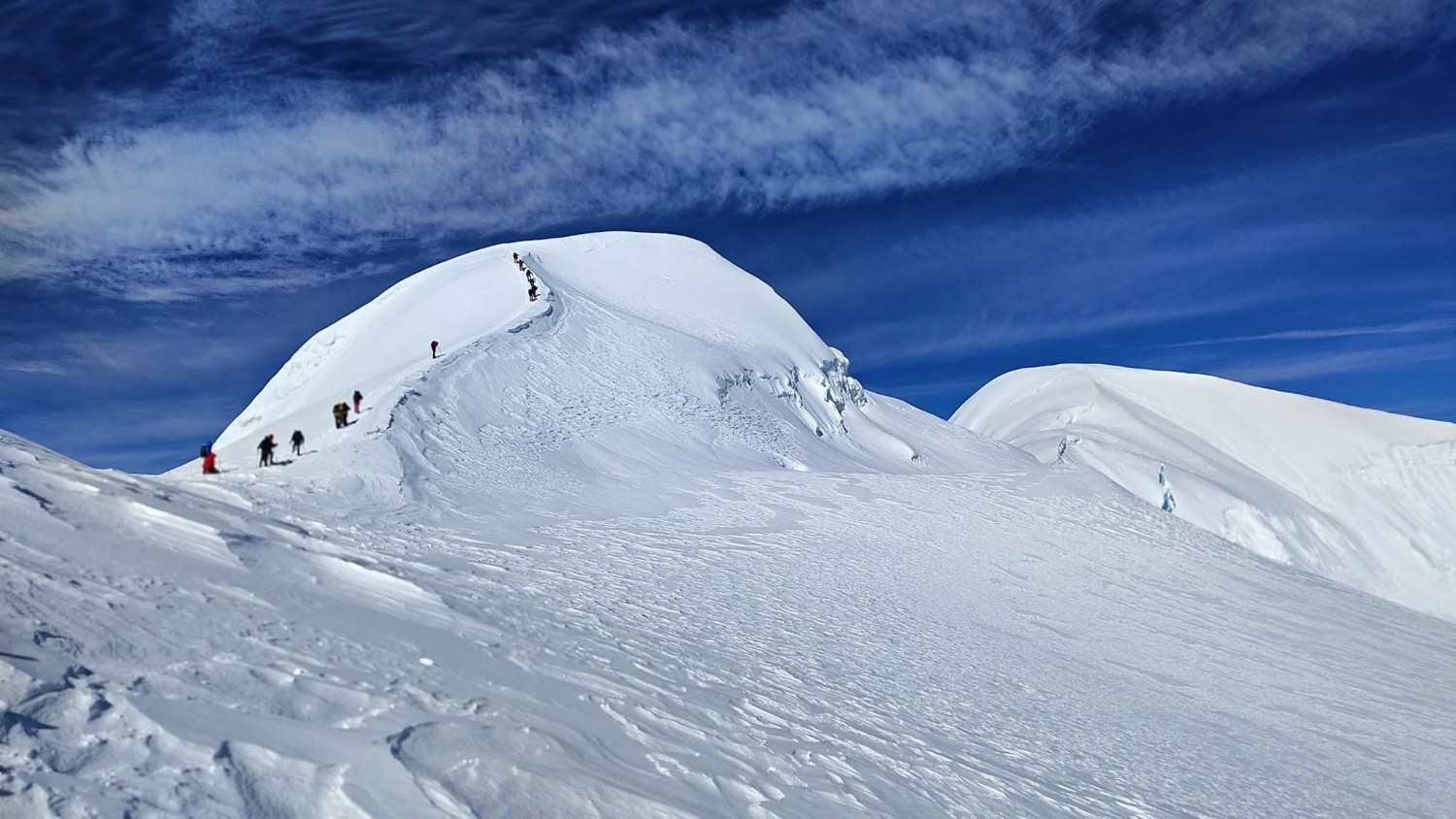
- Watch sunrise from Kala Patthar, the best viewpoint for Everest without technical climbing
- Cross Sagarmatha National Park, a UNESCO World Heritage Site, on foot
- Take in views of the Khumbu Icefall, Everest, Nuptse, and Lhotse from Everest Base Camp itself
Overviews
Everest Base Camp Trek without Flight, 17 Days
Anyone who has researched a trip to Everest Base Camp has probably come across stories about Lukla flight delays. Bad weather, low visibility, and backed up schedules can leave trekkers stuck in Kathmandu or Lukla for days, eating into vacation time and sometimes forcing rushed, less enjoyable itineraries just to catch up.
There is a way around that entirely. The everest base camp trek without flight skips Lukla altogether, using a private vehicle to reach the trailhead by road instead. No flights means no weather related cancellations disrupting your schedule, and because this route starts at a lower elevation than Lukla, it actually gives your body more time to properly acclimatize before you reach the higher sections of trail.
This 17 day version of everest trekking in nepal follows the original overland approach that early climbers and trekkers used decades ago, long before Lukla airport existed. You will drive from Kathmandu through Salleri and on to Kharikhola, then trek through Paiya, Phakding, Namche Bazaar, Tengboche, and Dingboche before reaching Everest Base Camp and Kala Patthar. It is one of the more complete versions of an everest base camp trekking package available, trading a shorter timeline for a smoother, more reliable journey.
Whether flight anxiety, past cancellation experiences, or simply wanting to follow the historic route has brought you here, this trek gives you the full Everest experience without leaving your schedule at the mercy of mountain weather.
History of the Route
Before Lukla airport opened in 1964, every trekker and mountaineer heading to Everest Base Camp had to walk in from much further away, often starting from Jiri or Phaplu and adding well over a week to the journey. An everest base camp trek from jiri or an everest base camp trek from phaplu used to be the only way to reach the mountain on foot.
This modern drive-in, drive-out version shortens that historic approach considerably by using a private vehicle to cover the lower sections, while still preserving the spirit of the original overland journey. The section from Kathmandu to Salleri runs on paved road, while the stretch from Salleri onward to the trailhead follows a dirt road that only stays passable during the dry season.
Landscape and Culture
The overland drive itself passes through hillside villages and terraced farmland long before you reach the Khumbu region, offering scenery most flight based trekkers never see. Once trekking begins at Kharikhola, the trail moves through Paiya and into classic Sherpa villages, joining the main Everest trail at Phakding.
From there, the route follows the same legendary trail toward Namche Bazaar, Tengboche, and Dingboche, passing through terrain that shifts from forest to alpine as you climb. Sagarmatha National Park, a UNESCO World Heritage Site, protects the upper section of this route, home to some of the most iconic scenery in the Himalayas.
Best Season for This Trek
This trek runs only during the dry season, generally from October to December and again from January to May, since the road connecting Salleri to the trailhead becomes impassable during the monsoon. Spring and autumn remain the most popular windows, offering the clearest skies and most reliable driving conditions.
Winter trekking is possible for well prepared trekkers, with fewer crowds and crisp visibility, though the drive and higher elevations turn noticeably colder during these months.
Weather and Temperature
Temperatures shift dramatically with elevation, much like the standard Everest Base Camp route. Lower villages near Kharikhola and Paiya stay relatively mild, while conditions turn cold quickly as you climb toward Dingboche, Lobuche, and Gorak Shep.
Because the highest point reached is Kala Patthar at 5,555m, nights at these elevations regularly drop well below freezing, even during the warmer trekking seasons.
Food, Water, Wifi and Accommodation
Accommodation is a 3-star hotel in Kathmandu, followed by guesthouses throughout the trek, with attached bathrooms available in Lukla, Phakding, and Namche, and shared bathrooms common elsewhere along the route.
Meals lean on familiar dishes like dal bhat, noodle soups, and simple breakfast options, with all meals included during the trekking days. Drinking water is available at each stop, typically boiled or filtered, so a reusable bottle with purification tablets is a smart, low waste choice.
Wifi is available in most villages up to Namche Bazaar through purchased data cards, though connectivity becomes unreliable past Dingboche and disappears almost entirely near Gorak Shep.
Permits
You will need a Sagarmatha National Park permit, a Pasang Lhamu Rural Municipality fee, and a TIMS card for this trek. All three are standard requirements for anyone trekking the salleri to everest base camp trek route and are arranged by your trekking agency before departure.
Outline Itinerary
Day 1
Your everest base camp trek without flight begins the moment you land at Tribhuvan International Airport. A representative will be waiting for you and will take you to your hotel in a private vehicle, so there is nothing to figure out on your own after a long flight. Later that day, or the following morning if you arrive in the evening, you will sit down with your guide for a pre-trip briefing. This is where your guide walks you through the route, answers any last minute questions, and checks that your permits, insurance details, and gear are all in order. It is worth bringing two passport sized photos and a copy of your travel insurance policy to this meeting, since both are needed for your trekking permits. The rest of the day is yours to rest, adjust to the time difference, and take a first look around Kathmandu if you have the energy for it.
Day 2
This is the day that sets this trek apart from the standard route. Instead of flying to Lukla, you will set out early in a private tourist vehicle for the long overland journey to Kharikhola, a drive that takes 12 to 14 hours depending on traffic and road conditions. The first stretch, from Kathmandu to Salleri, covers roughly 8 to 10 hours on paved road, winding through hills and small towns with plenty of scenery to take in along the way. Once you pass Salleri, the road turns to dirt for the final 3 to 5 hours into Kharikhola, and this section can get bumpy, so it helps to go in with the right mindset. Your driver will stop periodically for meals, snacks, and rest breaks, and by the time you arrive in Kharikhola in the evening, you will have already left the crowds and flight delays of Lukla far behind.
Day 3
The actual trekking begins today. From Kharikhola, the trail descends toward the Dudh Kosi River before climbing steadily uphill toward Paiya. It is a real first day, with ups and downs that test your legs a little, but the surrounding scenery makes up for the effort. Along the way you will catch glimpses of peaks like Numbur and Pikey rising above the hills, a preview of the bigger mountains still to come. This entire stretch of trail sees far fewer trekkers than the standard Lukla route, giving you a quieter, more authentic introduction to the region.
Day 4
Today’s walk takes you down to Surkhe village, a spot that flight based trekkers usually reach on their very first day from Lukla. From Surkhe, the trail winds toward Choplung, the point where this overland route officially joins the classic Everest Base Camp trail used by everyone flying in through Lukla. From here onward, you are walking the same path as thousands of trekkers before you, just having arrived by a completely different journey. The rest of the day is a gradual walk to Phakding, a small riverside village where you will spend the night.
Day 5
This is one of the more physically demanding days on the trek. You will follow the Dudh Kosi River, crossing it several times on suspension bridges strung with colorful prayer flags, before entering Sagarmatha National Park at the official checkpoint. From there, the trail climbs steeply toward Namche Bazaar, the largest and liveliest village on the entire route. Namche is known as the gateway to Everest, packed with bakeries, gear shops, restaurants, and a busy Saturday market that draws traders from across the region. Reaching it after a long climb feels like a genuine accomplishment, and the town’s energy is a welcome reward.
Day 6
Rather than pushing higher today, you will stay in Namche to let your body adjust to the altitude. Most trekkers use the morning for a hike up toward Hotel Everest View, a viewpoint near the old Syangboche airstrip that offers one of the clearest early looks at Everest, Lhotse, Ama Dablam, and Taboche on the entire trek. In the afternoon, you can visit Namche’s small Sherpa culture museum, browse its shops, or simply rest at your guesthouse. This kind of built in rest day is a key reason this route stays safer from an acclimatization standpoint than shorter itineraries.
Day 7
Today’s trail follows the rushing glacial waters of the Dudh Kosi before climbing to Tengboche, home to the largest and most spiritually significant monastery in the Khumbu region. Inside, you will find elaborately decorated walls, a large statue of Buddha, and ceremonial instruments used by the resident monks. Depending on timing, your group may be able to sit in on a prayer ceremony, either in the evening or the following morning, offering a quiet, memorable moment in the middle of a physically demanding trek.
Day 8
From Tengboche, the trail drops down to Deboche, crosses another suspension bridge over the Imja Khola, and climbs back up through Pangboche, passing thousands of carved mani stones along the way. The walk continues steadily uphill into Dingboche, a traditional Sherpa village known for sweeping views of Lhotse, Island Peak, and Ama Dablam. Your guide will keep the pace deliberately slow through this stretch, since moving too quickly at this elevation increases the risk of altitude sickness.
Day 9
This is your second built in rest day, and like Namche, it is not a day off so much as a strategic pause. Most trekkers hike up Nangkartshang Peak, a excellent viewpoint just above Dingboche that offers close up views of Ama Dablam, sometimes visible from summit to base on a clear day. The rest of the afternoon is free for resting, wandering the village, or simply enjoying the mountain air before the trail pushes higher.
Day 10
The trail today follows the lateral moraine of the Khumbu Glacier, passing stone memorials built in honor of climbers and Sherpa who lost their lives on nearby peaks. It is a sobering, quiet stretch of trail that puts the scale of these mountains into perspective. You will continue climbing toward Lobuche, a small settlement sitting at the foot of Lobuche Peak, where some trekkers start to notice mild breathing difficulty due to the thinning air.
Day 11
This is the biggest and most demanding day of the entire trek. You will walk along the Khumbu Glacier all the way to Everest Base Camp itself, the closest point most trekkers can reach to Mount Everest without mountaineering equipment. If you are trekking during spring, you may see active expedition camps preparing for summit attempts, adding a real sense of scale to the moment. The views of the Khumbu Icefall from base camp are dramatic and slightly intimidating, a reminder of what climbers face above this point. After taking it all in, you will return to Gorak Shep for the night.
Day 12
Many trekkers consider this the toughest yet most rewarding day of the trip. You will wake early and climb Kala Patthar in the dark, reaching the summit around sunrise for what is widely regarded as the best ground level view of Everest anywhere on the trek. Nuptse, Pumori, Cho Oyu, and Lhotse all crowd the skyline alongside Everest itself. After soaking in the view and warming up with breakfast back at Gorak Shep, you will begin the long descent to Pheriche, putting real distance between yourself and the high altitude zone.
Day 13
Today is mostly about retracing familiar ground, passing back through Pangboche and Tengboche before arriving in Namche Bazaar by the afternoon. With each step downward, breathing gets noticeably easier, and many trekkers describe this stretch as a chance to properly notice details they were too focused on the altitude to appreciate on the way up.
Day 14
You will descend the steep section down to Phakding, where you will stop for lunch, before the trail begins climbing again toward Lukla. Reaching Lukla carries a bit of irony on this particular trek, since it is the very airport most trekkers use to start their journey, but for you, it marks the point where your overland route rejoins the standard trail one final time before heading back toward Kharikhola.
Day 15
The trail descends toward Surkhe before climbing steeply up to Cheubas, followed by a mostly downhill walk back into Kharikhola, the same village where your trek began nearly two weeks earlier. Arriving back here brings a real sense of having completed a full loop, on foot, without a single flight involved.
Day 16
It is time for the long drive back, retracing the bumpy dirt road to Salleri before continuing on paved road all the way to Kathmandu. The 12 to 14 hour journey gives you plenty of time to reflect on everything you accomplished. Once you arrive, you can finally enjoy a proper hot shower and a comfortable hotel bed, and in the evening, your trip wraps up with a farewell dinner at a good restaurant in the city.
Day 17
Your everest base camp trek without flight comes to an end today. A representative will transfer you to Tribhuvan International Airport in time for your international flight home, closing out a trip that took you to the base of the world’s highest mountain entirely by road and trail.
The Trip Cost Includes
- Experienced, government-licensed Everest Base Camp trek private guide, English-speaking, with an assistant guide for groups over 7
- Porter service, one porter for every two trekkers
- Twin share accommodation in a 3-star hotel in Kathmandu with breakfast
- Guesthouse accommodation during the trek, with attached bathrooms in Lukla, Phakding, and Namche
- All meals during the trek, including a hot drink with each meal and fresh fruit after dinner
- Sagarmatha National Park permit, Pasang Lhamu Rural Municipality fee, and TIMS card
- Private vehicle transfer between Kathmandu and Kharikhola, both ways
- Airport transfers
- Duffel bag, trekking map, sun hat, and neck gaiter
- Farewell dinner in Kathmandu
The Trip Cost Excludes
- International airfare
- Nepal entry visa fee
- Lunch and dinner in Kathmandu
- Travel and medical insurance, including high altitude rescue coverage
- Personal expenses like snacks, drinks, and hot showers
- Tips for guide, porter, and driver
Add-ons and Options
Shape this trek around your own comfort level with a few simple add-ons.
- Buffer Days: Add extra days before or after the trek in case of unexpected delays
- Private Room Upgrade: Enjoy more privacy where available along the route
- Everest Base Camp Heli Tour: For travelers short on time, a scenic everest base camp heli tour can be arranged as a separate, shorter alternative experience
- Extra Night in Kathmandu: Add rest time before or after the trek
How to Customize Your Trip
Step 1: Choose your preferred departure date within the dry season
Step 2: Enter the number of travelers
Step 3: Select your preferred add-ons
Step 4: Confirm accommodation and meal preferences
Step 5: Complete your booking
Since this trip relies on a private vehicle rather than flights, your everest base camp trek private guide can adjust pacing and stops along the drive to suit your group’s preferences.
Trek Gallery
Trek Essentials
- Sun Hat
- Warm Beanie
- Sunglasses With UV Protection
- Base Layer
- Fleece Jacket
- Down Jacket
- Windproof Outer Shell
- Lightweight Gloves
- Warm Insulated Gloves
- Trekking Pants
- Thermal Leggings
- Waterproof Shell Pants
- Trekking Boots
- Wool Socks
- Camp Shoes
- Ice Cleats For Winter Months
- Sunscreen
- Lip Balm
- Wet Wipes
- Hand Sanitizer
- Daypack
- Duffel Bag
- Trekking Poles
- Headlamp
- Power Bank
- Water Bottle With Purification Tablets