
Good to Know

Arrival City
Kathmandu

Depature City
Kathmandu

Accommodation
Tea House & Hotel

Meals
Breakfast, Lunch and Dinner

Trip Grade
Challenging

Maximum Altitude
6,189m/20,305ft

Activity
Trekking and peak climbing
Highlights
- Reach Everest Base Camp and walk the Khumbu Glacier that leads climbers toward the summit
- Watch sunrise from Kala Patthar, the best ground level viewpoint for Mount Everest
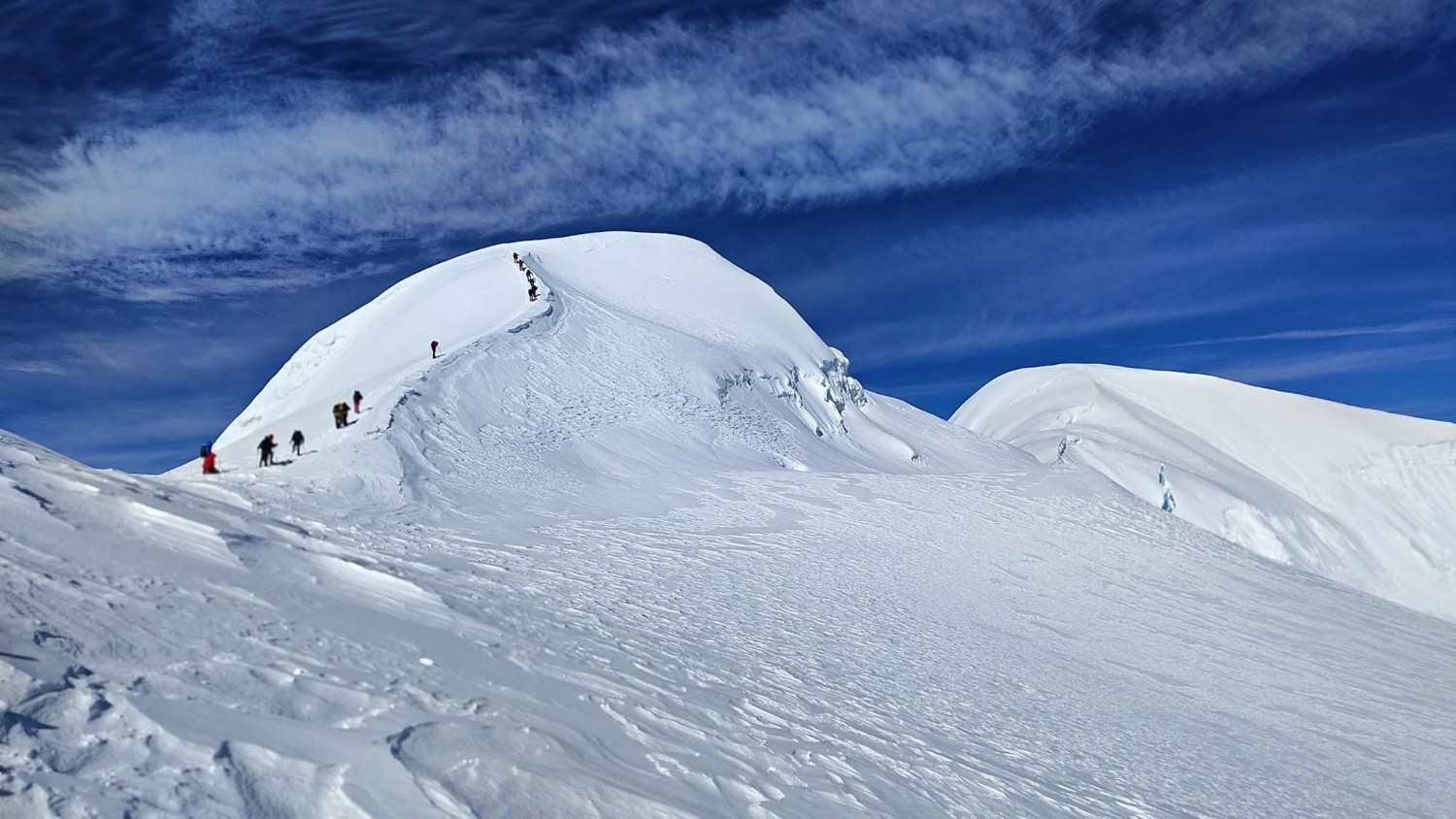
- Summit Island Peak at 6,189m, one of the most popular introductory climbing peaks in the Khumbu region
- One of the more complete forms of island peak climbing available, combining a full Everest Base Camp trek with a genuine technical summit
- Visit Tengboche Monastery, the spiritual center of the Khumbu region
- Cross into the quieter Chhukhung Valley, away from the busier main Everest trail
- Enjoy 10 hot showers built into your trip, a genuine comfort upgrade on a demanding combined itinerary
- Take home a Nepal Summit Treks neck gaiter printed with your trip map, a lasting keepsake from the journey
- Learn basic mountaineering skills, including rope work, crampon use, and ice axe technique, before your summit attempt
Overviews
Everest Base Camp Trek with Island Peak Climbing, 19 Days
A standard trek to Everest Base Camp already delivers incredible views and a genuine sense of achievement. But if you have already looked into the region, you have probably wondered what it would feel like to go one step further, to actually stand on a summit rather than just a viewpoint. That question is exactly what this itinerary answers.
This island peak climbing itinerary combines the classic Everest Base Camp route with a technical summit push up Island Peak, also known as Imja Tse, one of the more approachable 6,000m peaks in the entire Himalayas. Instead of choosing between a trekking trip and a climbing expedition, this everest base camp trek with island peak climbing gives you both, Everest Base Camp, Kala Patthar, and a genuine technical summit, all within a single well planned itinerary.
This 19 day everest base camp island peak climbing 19 days trip follows the same legendary trail used by Everest Base Camp trekkers through Namche, Tengboche, and Dingboche, before branching toward Chhukhung and eventually the Base Camp used specifically for the Island Peak climb. You will cross the Khumbu Glacier moraine, navigate a snowy ridge and glacier with the help of ropes and crampons, and reach a summit that offers stunning views of Everest, Lhotse, Makalu, and the surrounding Khumbu giants.
Whether you are already comfortable trekking at high altitude and want to test yourself on a real technical peak, or you are building experience before attempting something bigger, this island peak with everest base camp itinerary gives you a properly paced, well supported route to one of the most rewarding combined objectives in the Everest region.
Why Combine EBC with Island Peak Climbing
Island Peak earned its English name in 1952 from British mountaineer Eric Shipton, who thought the mountain looked like an island rising out of a surrounding sea of ice, given the Lhotse-Nuptse glacier system that surrounds it. Its Sherpa name, Imja Tse, reflects its location near the Imja Valley, close to the classic Everest Base Camp trekking corridor.
What makes this island peak climb so popular is the balance it strikes. It is technical enough to require ropes, crampons, and a harness on summit day, but the climbing itself does not demand prior mountaineering certification, since your climbing Sherpa provides hands on training near Chhukhung and Island Peak Base Camp before the attempt. This combination of everest base camp trek and island peak style trekking terrain plus a genuine technical summit is part of why it has become one of the most recommended entry points into high altitude climbing in Nepal, and why so many trekkers choose to pair it directly with their EBC trek rather than treating it as a separate trip.
Landscape and Culture
The route follows the same legendary trail used for Everest Base Camp treks through much of its length, passing through Namche Bazaar, Tengboche, and Dingboche before branching toward the quieter village of Chhukhung. Sagarmatha National Park, a UNESCO World Heritage Site, protects this entire stretch of trail.
Tengboche Monastery, one of the spiritual centers of the Khumbu, sits directly along this route, and many climbers describe their visit there as a meaningful moment before the physical demands of the climb ahead. Sherpa culture runs through every village on this route, visible in the prayer flags, mani stones, and warm hospitality found at each stop. Beyond Dingboche, the Chhukhung Valley offers a quieter alternative to the busier main EBC trail, giving you a real sense of leaving the crowds behind as the technical portion of the trip begins.
Best Time to Climb Island Peak
Spring, from March to early June, and autumn, from mid-September to November, are the best seasons for island peak climbing, offering the clearest skies and most stable conditions for the technical summit push. Monsoon months, July and August, are best avoided due to rain and poor visibility.
Winter climbing is possible, with fewer climbers on the mountain, though temperatures can be harsh at these elevations. Autumn in particular tends to bring the clearest views of Everest, Lhotse, Nuptse, and the wider Khumbu skyline from the summit itself.
Island Peak Altitude and Weather
The island peak altitude reaches 6,189m at the summit, considerably higher than Everest Base Camp itself at 5,364m. Reaching this height demands proper acclimatization, which this itinerary builds in through dedicated rest days in Namche and Dingboche before the technical climbing phase begins.
Temperatures shift dramatically with elevation. Daytime highs stay comfortable in the lower Khumbu villages, while conditions turn genuinely cold at Island Peak Base Camp and on summit day itself, when an early start, typically around 2am, is required to reach the top before afternoon winds pick up.
Food, Water, Wifi and Accommodation
Accommodation shifts throughout this trip. You will stay at a hotel in Kathmandu, teahouses with attached bathrooms in the lower Khumbu villages, and a tented camp at Island Peak Base Camp for the climbing phase.
Meals include familiar dishes like dal bhat, noodle soups, and simple breakfast options, with seasonal fruit throughout the trek. Drinking water is filtered using proper filtration systems along the trail, so a reusable bottle is a smart, low waste choice throughout the journey.
Wifi is available in most villages up to Namche and Tengboche, but connectivity becomes unreliable past Dingboche and disappears almost entirely near Chhukhung and Island Peak Base Camp.
Permits
You will need three permits for this expedition: a Sagarmatha National Park permit, a TIMS card, and an Island Peak Climbing Permit. All three fall under the standard island peak climbing permit requirements and are arranged by your trekking agency ahead of time.
Outline Itinerary
Day 1
Land in Kathmandu and transfer to your hotel. Meet your guide for a trip briefing in the evening, covering the route, permits, and what to expect over the coming weeks. Overnight at a hotel in Kathmandu.
Day 2
Spend the day finalizing permits and gear, with sightseeing at Pashupatinath and Boudhanath, two of Kathmandu’s most significant UNESCO World Heritage Sites. Overnight at a hotel in Kathmandu.
Day 3
A short, scenic flight takes you to Lukla, possibly routed via Ramechhap depending on the season, followed by an easy first trekking day along the Dudh Kosi River. Overnight at a guesthouse.
Day 4
Enter Sagarmatha National Park and climb steadily to the Khumbu’s main trading hub, with your first glimpse of Everest along the way. Overnight at a guesthouse.
Day 5
Hike toward Hotel Everest View for panoramic mountain views, then explore Namche’s shops and museum in the afternoon. Overnight at a guesthouse.
Day 6
Descend to the river before climbing to Tengboche, home to the largest monastery in the Khumbu region. Overnight at a guesthouse.
Day 7
Walk through Pangboche village and into the open Imja Valley, with Lhotse and Ama Dablam dominating the skyline. Overnight at a guesthouse.
The Trip Cost Includes
- Experienced, government licensed guide, English speaking, with an assistant guide for groups over 7
- Professional Sherpa climbing guide for the Island Peak summit push
- Porter service, one porter for every two trekkers
- Twin share accommodation in a hotel in Kathmandu with breakfast
- Guesthouse accommodation during the trek, with attached bathrooms in Lukla, Phakding, and Namche
- Tented camp accommodation and all meals during the stay at Island Peak Base Camp
- All meals during the trek, including seasonal fruits throughout
- Filtered water using proper filtration systems along the trail
- Kathmandu to Lukla flights, both ways
- Sagarmatha National Park permit, TIMS card, and Island Peak Climbing Permit
- Group climbing equipment, including climbing rope, ice screw, snow bar, and ice hammer
- Duffel bag, trekking map, and first aid kit with oximeter
- 10 hot showers during the trek
- Nepal Summit Treks neck gaiter, printed with your trip map
- All administrative expenses and government taxes
Note: exact costs for this island peak climbing package are shared separately based on group size, since this section focuses on what is covered rather than pricing.
The Trip Cost Excludes
- International airfare
- Nepal entry visa fee
- Lunch and dinner in Kathmandu
- Travel and medical insurance, including high altitude rescue coverage
- Personal expenses like snacks, drinks, and beverages beyond the included showers
- Tips for guide, climbing Sherpa, and porter
- Personal climbing equipment, available for rental at an additional cost
Add-ons and Options
Shape this island peak expedition around your own comfort level with a few simple add-ons.
- Helicopter Option: Upgrade the Lukla flight to a private helicopter transfer
- Private Tent Upgrade: Enjoy your own tent instead of shared camping accommodation at Island Peak Base Camp
- Personal Climbing Gear Rental: Rent technical climbing equipment rather than bringing your own
- Extra Buffer Days: Add flexibility around the Lukla flight schedule and the Island Peak summit window
How to Customize Your Trip
Step 1: Choose your preferred departure date within the recommended season
Step 2: Enter the number of travelers
Step 3: Select your preferred add-ons
Step 4: Confirm accommodation and meal preferences
Step 5: Complete your booking
Given the technical nature of this island peak climb, working with an experienced guide team matters more here than on a standard EBC trek, particularly for the summit day rope work and glacier crossing.
Trek Gallery
Trek Essentials
- Sun Hat
- Warm Beanie
- Sunglasses With UV Protection
- Climbing Helmet
- Base Layer
- Fleece Jacket
- Down Jacket
- Windproof Outer Shell
- Wool Or Technical Liner Gloves
- Insulated Hard-Shell Outer Gloves
- Trekking Pants
- Thermal Leggings
- Waterproof Shell Pants
- Trekking Boots
- Insulated Climbing Boots
- Wool Socks
- Crampons
- Gaiters
- Sunscreen
- Lip Balm
- Wet Wipes
- Hand Sanitizer
- Daypack
- Duffel Bag (Provided)
- Trekking Poles
- Headlamp
- Power Bank
- Water Bottle
- Climbing Harness
- Mountaineering Axe
- Ascender
- Belay Device
- Locking And Non-Locking Carabiners